For global buyers, selecting a 16 oz aluminum bottle involves more than comparing unit prices. The container must perform across different climates, filling lines, shipping routes, and retail conditions. Its compact size suits beverages, personal-care products, and specialty liquids. Its lightweight structure can also reduce freight weight compared with heavier packaging formats.
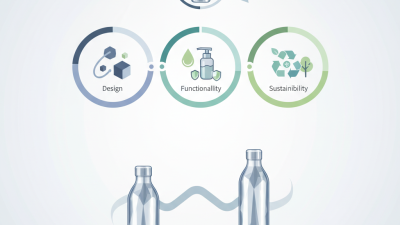
Dr. Susan Selke, a respected packaging sustainability researcher, offers a useful principle: “Packaging is a system, not a thing.” That idea matters when evaluating a 16 oz aluminum bottle. Buyers should examine the alloy, internal coating, closure fit, printing durability, and recycling pathway together. A bottle may look premium on a sample table, yet fail after vibration, humidity, or repeated temperature changes. Small details matter. Very much.
Aluminum provides a strong barrier against light and oxygen, but performance depends on proper engineering. The inner lining must suit the product’s acidity and formula. Suppliers should provide test data, production samples, and clear quality controls. They should also explain recycled content, factory capabilities, minimum order quantities, and delivery timelines. Certifications may support trust, but buyers still need independent verification.
The choice is not automatically sustainable. Producing aluminum requires significant energy, while recycling can improve its overall profile. Regional collection systems also differ widely. A responsible buyer should compare real supply-chain conditions, not rely on attractive marketing claims. That process may feel slower. It usually prevents expensive mistakes. This guide explores why the 16 oz aluminum bottle remains a practical global packaging option, while acknowledging its limits and the questions buyers should still ask.
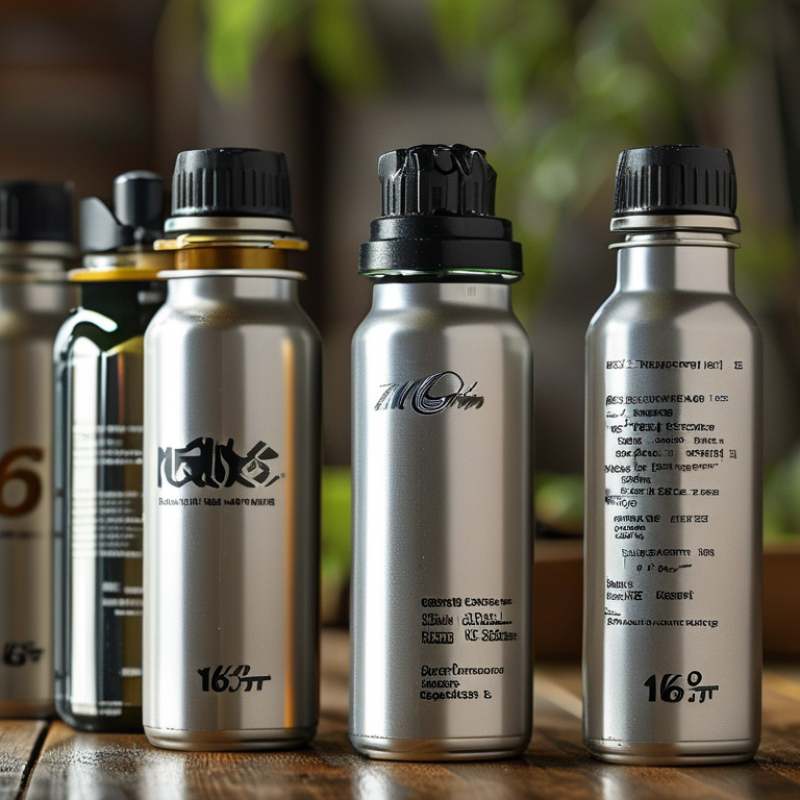
Why Choose 16 oz Aluminum Bottles for Global Buyers?
A 16 oz aluminum bottle equals approximately 473 mL in U.S. beverage trade. This capacity is widely recognized in American product specifications and purchasing documents. It offers a practical serving size without making the package feel oversized. For global buyers, the conversion matters because 16 U.S. fluid ounces do not equal exactly 500 mL. The difference is small, but it can affect labels, filling plans, and customs paperwork.
In procurement work, buyers should confirm whether “16 oz” means U.S. fluid ounces or another regional measurement. A bottle marked 473 mL may fit U.S. trade expectations more clearly. The internal volume also needs checking. Shoulder shape, base thickness, and usable headspace can reduce the actual liquid capacity. I have seen specifications look correct on paper, yet production samples required adjustment. That detail is easy to miss.
Tips: Request a technical drawing showing nominal volume, overflow volume, and fill line. Test the bottle with the intended beverage before placing a large order. Check label dimensions around the curved surface. Compare 473 mL with local retail preferences, since some markets favor 500 mL. Also review pallet quantities and shipping weight; aluminum is light, but closures and protective packing add measurable weight. A small conversion error can become an expensive correction.
| Data Dimension | 16 oz Aluminum Bottle Benchmark | Calculation or Reference | Buyer Relevance |
|---|---|---|---|
| U.S. customary capacity | 16 U.S. fl oz | Nominal U.S. beverage-trade size | Matches a familiar serving size for U.S. buyers and distributors. |
| Metric conversion | 473.176 mL, commonly shown as 473 mL | 1 U.S. fl oz = 29.5735295625 mL; 16 × 29.5735295625 = 473.176472 mL | Provides a clear bridge between U.S. and metric specifications. |
| Imperial fluid-ounce comparison | 16 Imperial fl oz = 454.61 mL | 1 Imperial fl oz = 28.4130625 mL | Prevents specification errors when selling into markets using Imperial measures. |
| Difference from a 500 mL bottle | 26.824 mL less than 500 mL | 500 − 473.176 = 26.824 mL; approximately 5.36% less | Useful for comparing fill volume, shipping declarations, and shelf positioning. |
| Approximate water content by mass | Approximately 472 g of water | 473.176 mL × approximately 0.998 g/mL at 20°C | Supports preliminary carton-weight and freight calculations; actual beverage density varies. |
| Nominal versus usable fill | Nominal capacity: 473 mL; usable fill may be lower | Headspace is required for sealing, pressure control, and product expansion. | Buyers should confirm the declared net quantity and filling tolerance with the supplier. |
| Aluminum material profile | Lightweight, formable, and recyclable metal packaging | Aluminum is widely used for beverage containers and can be recycled repeatedly when properly collected and processed. | Offers a durable package format for export handling and merchandising. |
| Barrier function | High barrier against light and gases when correctly sealed and internally coated | Protection depends on alloy, closure, coating system, seam quality, and product compatibility. | Helps protect beverage quality during international distribution, subject to validation testing. |
| Recommended specification checks | Capacity, neck finish, closure, coating, dimensions, and compliance documentation | Bottle geometry and specifications vary by manufacturer and filling process. | Reduces risks involving filling-line compatibility, leakage, labeling, and import requirements. |
| Labeling note | Use “16 U.S. fl oz (473 mL)” where permitted and accurate | Final declaration must follow the destination market’s labeling and measurement rules. | Makes the product specification understandable to both U.S. and metric-market buyers. |
Note: The 473 mL figure is the rounded metric equivalent of 16 U.S. fluid ounces. Actual product fill volume, bottle dimensions, tare weight, closure type, and regulatory labeling requirements should be confirmed for the specific package design and destination market.
For global buyers, a 16 oz aluminum bottle offers a practical balance between capacity, weight, and transport efficiency. Its compact shape fits standard cartons and retail shelves. More importantly, recycled aluminum changes the environmental calculation.
The International Aluminium Institute reports that recycling aluminum uses about 5% of the energy required for primary production, or 95% less energy. That difference can reduce pressure on manufacturing resources.
The benefit is visible in everyday operations. A bottle made with recycled aluminum can require less energy before filling, labeling, and shipment. Aluminum also remains highly recyclable when collection systems work properly. IAI data supports aluminum’s strong circularity potential.
Yet the number is not a magic guarantee. Recycling still depends on sorting, local infrastructure, and responsible processing. A poorly managed supply chain can weaken the advantage.
Procurement teams should ask for recycled-content percentages, energy data, and traceable supplier records. These details show experience beyond attractive packaging claims. They also support more reliable environmental reporting.
The 16 oz format can help control material use, but size alone does not prove sustainability. Some buyers may expect recycled aluminum to solve every impact. That expectation needs review. Production methods, transport distance, closures, and end-of-life recovery still matter. Evidence should guide the decision.
Why Choose 16 oz Aluminum Bottles for Global Buyers?
For global buyers, a 16 oz aluminum bottle offers strong protection against light, oxygen, and ultraviolet exposure. This barrier matters when products travel through hot ports, bright warehouses, and long delivery routes. Aluminum blocks visible light and UV radiation from reaching the contents. It also limits oxygen transfer through the bottle wall. That can help preserve flavor, aroma, color, and product stability.
The benefit is practical. A clear bottle may allow sunlight to warm and degrade sensitive contents. Aluminum provides a solid, opaque shield. It also supports compact pallet loading and relatively low shipping weight. However, the bottle is not magic. The cap, seal, liner, and filling process can still create weak points. Professional packaging checks should include torque control, leak testing, and oxygen exposure trials.
Coatings deserve close attention. An interior lining can reduce contact between aluminum and acidic or salty contents. Its suitability depends on formulation, storage time, and temperature. A small dent may not destroy the barrier, but it can damage the coating or closure area. Buyers should request migration data, coating specifications, and batch quality records before approving large orders. In real supply chains, performance sometimes differs from laboratory results. Humidity, rough handling, and poor sealing can quietly change the outcome.
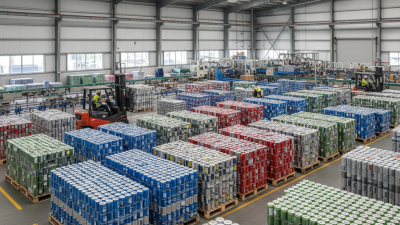
For global buyers, 16 oz aluminum bottles fit familiar export packaging systems. Their compact size supports efficient carton design and stable pallet patterns. In export planning, buyers can request carton drawings before approving production. This step reveals wasted space early. Standard outer cartons often hold consistent quantities, simplifying warehouse counts and container loading. Yet “standard” is not universal. Neck finishes, caps, and protective sleeves can change carton dimensions.
A reliable supplier should provide packed-carton measurements, gross weight, pallet limits, and loading photos. These details help freight teams compare sea, rail, and air options with fewer surprises. Aluminum bottles resist breakage better than glass, but they still need dividers or controlled stacking. A dented shoulder can reduce retail appeal.
Moisture-resistant cartons matter in humid ports and long transit routes. Buyers should also confirm pallet treatment, labeling, and destination requirements before shipment. Small errors become expensive at customs or in a distribution center.
We have seen packaging plans look efficient on paper, then lose capacity after corner protection is added. That is worth checking twice. A trial shipment can test fit, handling, and unloading speed before larger orders. It costs time. It can prevent larger delays.
Why Choose 16 oz Aluminum Bottles for Global Buyers?
A 16 oz aluminum bottle holds approximately 473 milliliters, matching common beverage serving sizes worldwide. Its lightweight structure can reduce transport weight compared with many rigid alternatives. However, packaging performance depends on wall thickness, closure design, and filling conditions. The format is useful, but not automatically sustainable.
Europe offers a measurable circularity benchmark. Metal Packaging Europe and European Aluminium reported that 76% of aluminum beverage cans were recycled in Europe in 2022. This figure shows strong collection and reprocessing infrastructure. It also proves that aluminum can remain valuable after use. The International Aluminium Institute reports that recycled aluminum requires about 95% less energy than primary aluminum production. That difference matters for buyers assessing lifecycle impacts.
Recycling needs a functioning system.
A bottle still requires correct sorting, collection, and remelting. Export markets vary widely in these services. Buyers should request verified recycled-content data, material specifications, and recycling guidance before approving large orders. Some suppliers may describe aluminum as “green” without measuring the entire package. That deserves careful questioning. A 16 oz bottle can support circular packaging goals, yet its real benefit depends on what happens after consumption. Designing clear labels and compatible closures may improve recovery rates, although results will differ by region.
Aluminum packaging combines a familiar 16 oz (approximately 473 mL) serving format with strong circularity potential. In 2022, Europe recycled 76% of aluminum beverage cans, compared with 43.1% in the United States.
Aluminum can be recycled repeatedly while retaining its material properties. Recycling rates vary by market and collection system.
Sources: European Aluminium, 2022; U.S. Environmental Protection Agency, 2022.
| Cookie | Duration | Description |
|---|---|---|
| cookielawinfo-checkbox-analytics | 11 months | This cookie is set by GDPR Cookie Consent plugin. The cookie is used to store the user consent for the cookies in the category "Analytics". |
| cookielawinfo-checkbox-functional | 11 months | The cookie is set by GDPR cookie consent to record the user consent for the cookies in the category "Functional". |
| cookielawinfo-checkbox-necessary | 11 months | This cookie is set by GDPR Cookie Consent plugin. The cookies is used to store the user consent for the cookies in the category "Necessary". |
| cookielawinfo-checkbox-others | 11 months | This cookie is set by GDPR Cookie Consent plugin. The cookie is used to store the user consent for the cookies in the category "Other. |
| cookielawinfo-checkbox-performance | 11 months | This cookie is set by GDPR Cookie Consent plugin. The cookie is used to store the user consent for the cookies in the category "Performance". |
| viewed_cookie_policy | 11 months | The cookie is set by the GDPR Cookie Consent plugin and is used to store whether or not user has consented to the use of cookies. It does not store any personal data. |