

One Llodio Drive, Hermitage, PA USA 16148

10 Tips for Packaging in the Pharmaceutical Industry?
Packaging in pharmaceutical industry is more than a protective outer layer. It helps preserve product quality, support patient safety, and communicate essential handling information. A carton, blister, vial, or tamper-evident seal can influence how medicine survives transport and daily use.
This guide presents ten practical tips for creating safer, more reliable pharmaceutical packaging. It considers material selection, moisture and light protection, child-resistant features, labeling accuracy, traceability, and usability. Each decision should reflect the product’s sensitivity, dosage form, storage conditions, and intended users. Small details matter. A poorly aligned label or weak seal can create serious risks.
Good packaging decisions should follow validated processes and applicable quality standards. Regulatory expectations differ between markets, so technical teams should confirm current requirements with qualified professionals. Testing should include stability studies, seal integrity checks, transport simulation, and human-factor evaluation when appropriate. Real manufacturing experience also reveals an uncomfortable truth: even well-designed packaging can fail when operators, patients, or supply partners misunderstand it.
That is worth examining.
The following tips combine practical observations with established pharmaceutical quality principles. They are not a substitute for formal risk assessment, validation, or regulatory review. Instead, they provide a clear starting point for teams improving packaging performance. The goal is not attractive packaging alone. It is dependable protection from production to the patient’s hands, even when conditions are imperfect.
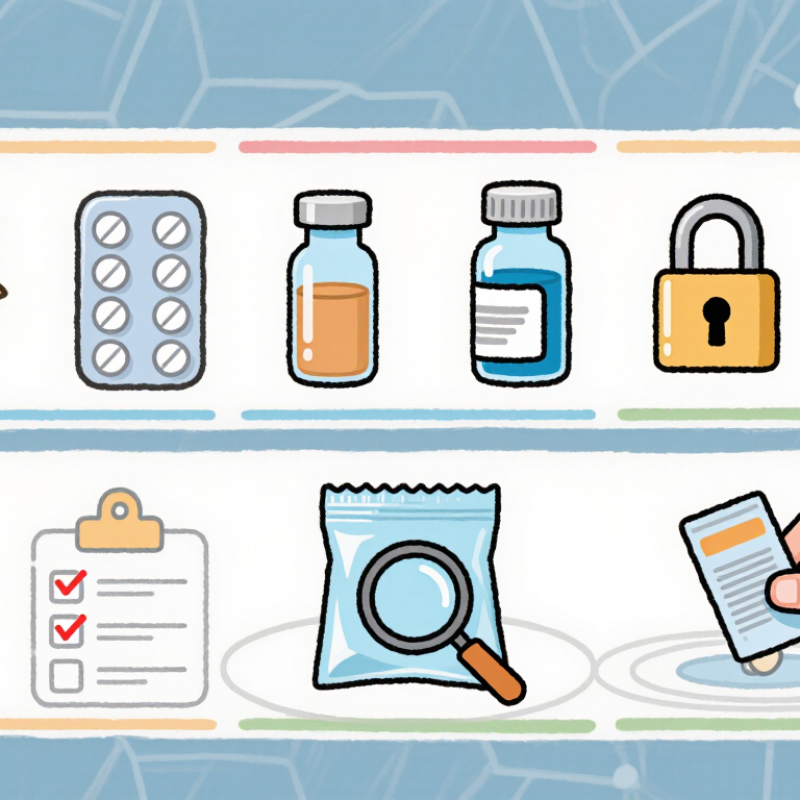
Define Pharmaceutical Packaging Requirements and Product Risks
10 Tips for Packaging in the Pharmaceutical Industry
Define Pharmaceutical Packaging Requirements and Product Risks
Pharmaceutical packaging should begin with the product, not the container. Identify the dosage form, route of administration, shelf life, and storage conditions. A moisture-sensitive tablet may need a high-barrier blister or tightly sealed bottle. Light-sensitive liquids require opaque or light-resistant materials. Sterile products demand validated closure systems and controlled handling. These details shape every later packaging decision.
Risk assessment should examine the full supply chain. Consider temperature changes, vibration, drops, humidity, and repeated opening. Check seal integrity after transport simulation. Review extractables, leachables, compatibility, and possible interaction with the formulation. Child-resistant features may protect families, while clear labels support correct use. Accessibility matters too. A cap that protects well but frustrates older patients is not a complete solution.
Documentation must connect each requirement to evidence. Use supplier specifications, stability data, testing records, and packaging validation results. Human factors testing can reveal problems that laboratory checks miss. A label may be technically correct yet difficult to read under poor lighting. That is a real risk. A checklist alone is not enough. Teams should revisit assumptions when the formula, filling process, or distribution route changes. Sometimes, the original packaging choice survives because nobody questions it. That deserves review. Temperature mapping, seal testing, and complaint trends can expose weaknesses before they affect product quality.
10 Tips for Packaging in the Pharmaceutical Industry? - Define Pharmaceutical Packaging Requirements and Product Risks
| No. | Packaging Focus | Key Requirement | Main Product Risk | Recommended Control | Verification Evidence |
|---|---|---|---|---|---|
| 1 | Define the product profile | Document dosage form, route of administration, strength, shelf life, storage conditions, and sensitivity to moisture, oxygen, light, temperature, or contamination. | A package that is suitable for one formulation may fail for another, causing potency loss, degradation, or contamination. | Create a product-risk assessment and convert critical quality attributes into measurable packaging requirements. | Approved packaging requirements specification, stability data, and documented quality-risk assessment. |
| 2 | Control moisture and humidity | Use a moisture barrier appropriate to the product, with a defined water-vapor transmission performance and a suitable closure system. | Moisture can cause hydrolysis, softening, dissolution changes, microbial growth, or reduced tablet and capsule stability. | Select compatible blister materials, bottles, liners, desiccants, or sachets; protect the package from excessive humidity during storage and transport. | Moisture-permeation testing, accelerated stability studies, seal-integrity testing, and in-use stability results. |
| 3 | Protect against light and oxygen | Specify light transmission and oxygen-barrier performance when the active ingredient or formulation is photosensitive or oxidation-sensitive. | Exposure may produce discoloration, impurity formation, reduced potency, or changes in product performance. | Use opaque or light-resistant components, suitable barrier films, controlled headspace, and validated filling and sealing conditions. | Light-transmission data, oxygen-transmission testing, photostability studies, and assay or impurity trending. |
| 4 | Ensure material compatibility | Packaging materials must not adversely react with, absorb, adsorb, contaminate, or extract substances into the drug product. | Leachables, extractables, adsorption, or chemical interaction may affect safety, identity, strength, quality, or purity. | Evaluate container-closure materials, inks, adhesives, elastomers, coatings, and contact surfaces under intended conditions. | Extractables and leachables assessment, compatibility studies, supplier specifications, and component qualification records. |
| 5 | Validate container-closure integrity | The finished container and closure must maintain protection throughout filling, storage, distribution, and the labeled shelf life. | Leaks can permit entry of air, moisture, microorganisms, or particulates and can lead to loss of sterility or product deterioration. | Define critical sealing parameters and validate the packaging process, including worst-case configurations and transportation stresses. | Validated container-closure integrity method, seal-strength results, routine process checks, and deviation records. |
| 6 | Address sterility and microbial risk | Sterile products require a packaging system and process capable of maintaining sterility until use, including appropriate handling and closure controls. | A compromised seal or unsuitable material can permit microbial ingress and create a serious patient-safety risk. | Use qualified sterile components, validated sterilization or aseptic processes, environmental monitoring, and robust seal controls. | Sterility testing where applicable, media-fill or aseptic-process validation, environmental-monitoring trends, and integrity-test results. |
| 7 | Design for correct use | The package should support accurate dosing, clear instructions, accessible opening, and appropriate usability for the intended patient or caregiver. | Confusing instructions, difficult opening, or poor dose visibility may cause missed doses, overdosing, or accidental use. | Apply human-factors principles, readable labeling, calibrated delivery devices, and child-resistant or senior-friendly features when required. | Usability studies, dose-delivery accuracy tests, label review, readability assessment, and opening-force testing. |
| 8 | Prevent mix-ups and counterfeiting | Packaging and labeling must support product identification, batch traceability, tamper evidence, and applicable serialization or security requirements. | Label or product mix-ups, unauthorized substitution, and undetected tampering can result in incorrect treatment. | Use line clearance, barcode verification, controlled artwork, tamper-evident features, reconciliation, and documented packaging inspections. | Batch records, barcode scans, vision-inspection results, reconciliation reports, artwork approvals, and tamper-evidence checks. |
| 9 | Qualify transport and storage | The shipping configuration must protect the product from temperature excursions, vibration, shock, compression, humidity, and handling damage. | Distribution stress can cause breakage, seal failure, label loss, dose-form damage, or exposure outside the approved temperature range. | Define shipping lanes and limits; use suitable secondary packaging, cushioning, insulation, monitoring, and handling instructions. | Transport simulation, temperature and humidity mapping, shock or vibration testing, and review of excursion procedures. |
| 10 | Build quality and lifecycle controls | Packaging components, suppliers, specifications, changes, complaints, and defects must be managed within a documented pharmaceutical quality system. | Uncontrolled changes or recurring defects may reduce package performance and create regulatory or patient-safety issues. | Qualify suppliers, establish incoming controls, monitor critical defects, perform change control, and maintain a continued process-verification program. | Supplier audits, certificates of analysis or conformity, incoming inspection records, CAPA, change-control files, and annual product reviews. |
Related Posts
-
How to Choose Pharmaceutical Packaging for Global Sourcing
-

What Are Pharmaceutical Containers Used For?
-
How to Optimize Packaging in Pharmaceutical Industry for Better Compliance?
-
Why are Pharmaceutical Containers Essential for Medicine Safety?
-

Top 10 Pharmaceutical Containers You Need to Know About?
-

What is the Best Type of Pharmaceutical Containers for Export?