

One Llodio Drive, Hermitage, PA USA 16148

What Are Pharmaceutical Containers Used For?
Pharmaceutical containers do far more than hold medicine. They preserve product quality from factory filling to patient use. A glass vial, blister pack, or HDPE bottle must contain the formulation securely. It must also protect against moisture, oxygen, light, contamination, and mechanical damage. Some medicines need cold-chain handling. Others require protection from ultraviolet exposure. Small design choices can change stability.
The U.S. Food and Drug Administration states that container closure systems must protect a drug’s identity, strength, quality, and purity. This principle appears in its guidance, Container Closure Systems for Packaging Human Drugs and Biologics. United States Pharmacopeia standards also assess packaging materials, including glass and plastic. These standards support practical checks for chemical compatibility, extractables, leachables, and container integrity. The details matter. A cracked syringe tip can compromise sterility. A weak blister seal can admit humidity.
WHO’s Global Surveillance and Monitoring System reports that about one in ten medical products in low- and middle-income countries is substandard or falsified. Containers cannot solve every supply-chain problem. However, tamper-evident features, serialization, clear labeling, and robust seals can support safer distribution. Packaging also improves dosing accuracy and patient adherence, especially with unit-dose formats. Yet no container is perfect. A design may protect stability but create recycling challenges or confuse older patients. Therefore, pharmaceutical containers should be evaluated through stability testing, transport studies, usability research, and real manufacturing experience. The best solution protects the medicine and the person using it.
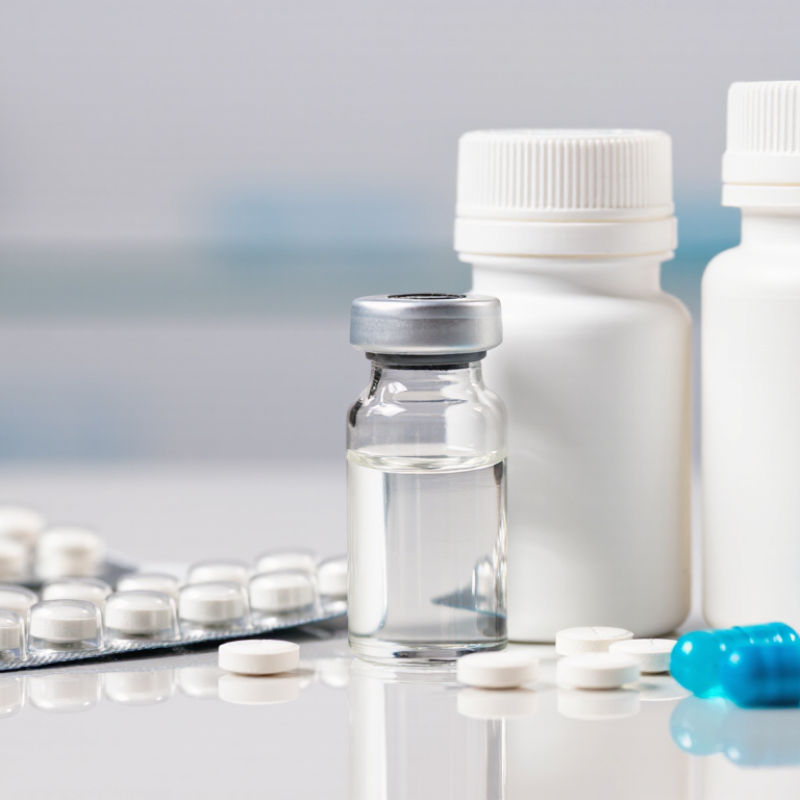
Types and Materials of Pharmaceutical Containers
Pharmaceutical containers protect medicines from moisture, oxygen, light, contamination, and physical damage. They also support accurate dosing and safe transport. A suitable container must match the medicine’s chemical and physical properties. For example, a light-sensitive liquid may require an amber glass bottle with a tight closure. Tablets often use bottles, blister packs, or unit-dose pouches. Each format affects storage, dispensing, and patient handling.
Glass containers provide strong chemical resistance and useful visibility. Type I glass is commonly selected for sensitive injectable products because it limits interaction with the formulation. Plastic containers are lighter and less breakable. Materials such as high-density polyethylene and polypropylene may suit tablets, capsules, or selected liquids. However, plastic can absorb ingredients or allow slow gas movement. That risk requires proper compatibility testing.
Closures matter as much as the container body. Rubber stoppers, screw caps, liners, and child-resistant systems help control leakage and contamination. Sterile products need packaging systems that maintain integrity during filling, transport, and use. Small details matter. A damaged seal can reduce protection before the expiry date. In practical packaging work, no material is perfect. A container may protect the medicine well but remain difficult to open, recycle, or inspect. Selection should therefore consider stability data, manufacturing experience, user needs, and storage conditions rather than appearance alone.
| Container Type | Common Materials | Typical Pharmaceutical Uses | Protection Provided | Key Selection Considerations |
|---|---|---|---|---|
| Tablet and Capsule Bottles | High-density polyethylene (HDPE), polypropylene (PP), glass | Storing oral tablets, hard capsules, and some softgel products for dispensing and patient use. | Protection from physical damage, moisture, contamination, and light when an opaque or light-resistant container is used. | Moisture barrier, closure performance, child-resistant requirements, size, and compatibility with the dosage form. |
| Blister Packs | PVC, PVdC-coated PVC, aluminum foil, aluminum-based laminate | Unit-dose packaging for tablets and capsules, particularly when dose identification and portability are important. | Separation of individual doses; protection from handling, contamination, and, depending on the structure, moisture and light. | Barrier level, seal integrity, push-through performance, machinability, and ease of opening for the intended user. |
| Strip Packs | Aluminum foil laminates, paper-polymer-aluminum structures | Packaging tablets and capsules in individually sealed pockets or continuous strips. | Strong protection against moisture, oxygen, light, and external contamination when properly sealed. | Laminate composition, seal quality, product sensitivity, printing requirements, and opening method. |
| Oral Liquid Bottles | Type III glass, HDPE, polyethylene terephthalate (PET), PP closures | Containing syrups, solutions, suspensions, and other liquid medicines for oral administration. | Containment of liquids and protection from leakage, contamination, and, when needed, light exposure. | Chemical compatibility, extractables and leachables, closure tightness, dosing-device fit, and resistance to breakage. |
| Syringes and Prefilled Syringes | Borosilicate glass, cyclic olefin polymer (COP), cyclic olefin copolymer (COC), elastomers | Containing ready-to-administer injectable solutions and some biologic medicines. | Maintains sterility and supports accurate delivery while limiting interaction between the drug and the container. | Container closure integrity, particulate control, siliconization, compatibility, extractables, and performance during transport. |
| Vials | Borosilicate glass, molded glass, plastic polymers, elastomeric stoppers | Storing injectable solutions, suspensions, powders for reconstitution, and some diagnostic preparations. | Supports sterile containment and may protect the product from oxygen, moisture, and light when an appropriate closure and color are used. | Glass type, stopper compatibility, crimp seal, headspace, sterility assurance, and resistance to breakage or delamination. |
| Ampoules | Borosilicate glass or other pharmaceutical-grade glass | Single-dose storage of sterile injectable solutions that are opened immediately before administration. | Provides a hermetically sealed barrier against microbial contamination before opening. | Glass compatibility, breakage risk, opening safety, particulate generation, and single-use handling requirements. |
| Ointment and Cream Tubes | Aluminum, laminated plastic, high-density polyethylene, polypropylene | Containing topical creams, ointments, gels, and pastes for application to the skin or mucous membranes. | Limits exposure to air and contamination while enabling controlled dispensing. | Product viscosity, compatibility with the inner layer, seal integrity, collapsibility, and protection from light and oxidation. |
| Nasal and Ophthalmic Containers | Low-density polyethylene (LDPE), HDPE, PP, glass, elastomeric components | Dispensing sterile or non-sterile nasal sprays, eye drops, and related liquid preparations. | Provides containment and controlled dosing; sterile products require protection against microbial ingress during use. | Droplet or spray performance, preservative compatibility, container closure integrity, dose consistency, and user handling. |
| Inhaler Canisters and Cartridges | Aluminum, stainless steel, polymers, elastomeric seals | Containing metered-dose inhalation formulations and supporting delivery through an inhaler device. | Withstands internal pressure and helps protect the formulation from moisture, contamination, and environmental exposure. | Pressure resistance, valve compatibility, dose uniformity, corrosion resistance, and interaction with the formulation. |
| Infusion Bags | PVC, polyolefin multilayer films, EVA, elastomeric ports | Containing large-volume parenteral solutions, including intravenous fluids and some nutrition preparations. | Maintains sterile containment and provides a flexible, lightweight package for transport and administration. | Material permeability, flexibility, seal strength, compatibility with the solution, sterilization method, and particulate control. |
| Dry Powder and Reconstitution Containers | Glass vials, HDPE bottles, desiccant-equipped closures, multilayer laminates | Storing moisture-sensitive powders, including products that are reconstituted before use. | Limits moisture uptake and protects powder stability until the specified liquid is added. | Moisture-vapor transmission rate, desiccant capacity, closure integrity, reconstitution instructions, and storage conditions. |
Related Posts
-
How to Choose Pharmaceutical Packaging for Global Sourcing
-
Top 10 Pharmaceutical Containers You Need to Know About?
-

Top 10 Packaging Pharmaceutical Innovations Transforming the Industry?
-
How to Optimize Packaging in Pharmaceutical Industry for Better Compliance?
-
Why are Pharmaceutical Containers Essential for Medicine Safety?
-
What is the Best Type of Pharmaceutical Containers for Export?