
For global buyers, Microbial Fermentation is more than a production method. It can turn sugars and other feedstocks into ingredients used in food, beverages, enzymes, and health products. A stainless-steel vessel may look simple from the outside. Inside, temperature, pH, oxygen, and timing must stay within carefully controlled ranges. Small changes can affect yield, taste, or consistency.
Louis Pasteur, whose research helped establish modern microbiology, is often associated with the phrase, “Fermentation is life without air.” That line captures one part of the science, but not every fermentation process works without oxygen. Buyers should look beyond familiar descriptions and ask suppliers about the specific organism, process conditions, and quality controls. Clear answers matter.
The commercial case is practical. Fermentation may support consistent production and make use of different feedstocks, depending on the product and facility. Yet capacity, energy demand, raw-material sourcing, and batch variability still deserve scrutiny. A sample jar can impress; a dependable supply record matters more. Buyers need evidence: specifications, traceability, testing practices, and realistic delivery commitments. No single checklist removes every risk. Even well-run processes can face delays or changing input costs. That is worth remembering. A careful evaluation of Microbial Fermentation helps global buyers compare suppliers on more than price—and recognize where promising claims still need proof.
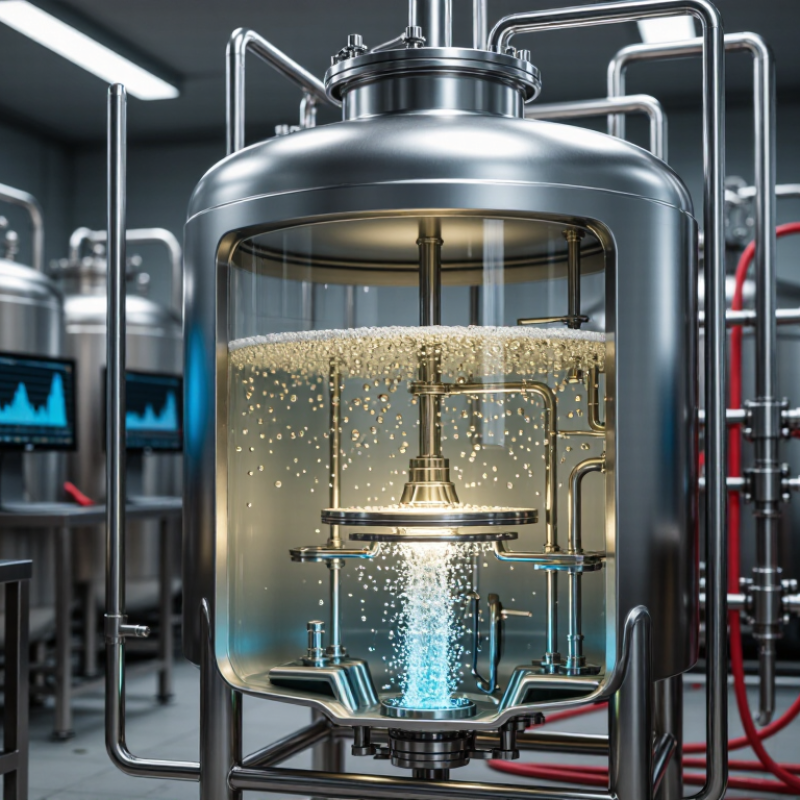
Microbial fermentation uses bacteria, yeasts, or molds to turn selected feedstocks into useful products. The organism matters. Yeasts often produce enzymes, flavors, or organic acids, while some bacteria make amino acids and other fermentation products. Molds can help create enzymes and ingredients used in food processing. These are broad examples, not fixed rules; production depends on the strain and conditions.
In a commercial facility, operators prepare a nutrient medium, sterilize equipment, and introduce a measured culture into a fermenter. Temperature, oxygen, acidity, and mixing are monitored as the microbes grow. Small changes can affect yield. After fermentation, filtration or other separation steps recover the target material, which may then be concentrated, dried, or refined. Not glamorous. Still, each step affects consistency.
Global buyers should ask how suppliers identify and control production strains, monitor batches, and handle contamination risks. Useful records may include specifications, test results, and traceability documents. Confirm that these match the intended application and destination-market requirements. A sample can look clear and still differ in activity or performance. Fermentation is often described as predictable, but biological systems vary; even well-controlled processes need routine testing and careful review.
| Organism | Commercial product | Typical process conditions | Why it matters to buyers |
|---|---|---|---|
| Saccharomyces cerevisiae | Ethanol; baker’s yeast | Ethanol production is generally oxygen-limited; many industrial processes operate around 30–35°C. Yeast propagation for baking requires oxygen and controlled nutrient supply. | A well-established production organism used in food and fuel supply chains; process conditions and strain choice affect yield and product consistency. |
| Lactobacillus and related lactic acid bacteria | Lactic acid; fermented foods | Usually grown with limited oxygen; commonly operated within roughly 30–45°C, depending on species and product. pH is monitored because acid accumulation can slow growth. | Used across food and ingredient applications. Buyers should confirm strain suitability, acid profile, and food-grade specifications. |
| Aspergillus niger | Citric acid; industrial enzymes | Citric acid production is typically an aerobic process, often near 25–30°C. The medium and pH are controlled to support product formation and limit contamination. | A major microbial source of citric acid. Aeration, substrate quality, and downstream purification influence supply reliability and grade. |
| Bacillus subtilis | Proteases, amylases, and other enzymes | Generally cultivated with aeration; many processes use temperatures around 30–37°C. Nutrient supply and pH are adjusted for the target enzyme. | Enzyme production can be tailored to food, detergent, and industrial uses. Buyers should compare activity units and application-specific performance. |
| Penicillium rubens (historically reported as P. chrysogenum) | Penicillin | An aerobic, carefully controlled fermentation. Industrial production commonly uses fed-batch operation, with temperature, pH, oxygen transfer, and nutrient feeding managed throughout the run. | Illustrates how strain performance and process control affect output. Pharmaceutical products require stringent quality and regulatory controls. |
Conditions shown are indicative ranges reported for industrial or laboratory fermentation contexts; actual operating parameters vary by strain, formulation, equipment, and product specification.
Why Is Microbial Fermentation Important for Global Buyers?
An industry report put global fuel ethanol production at 112 billion liters in 2023. That figure shows how fermentation has moved far beyond small vats and laboratory trials. In large plants, microbes convert sugars from crops or other approved biomass into ethanol. Buyers may never see the fermentation tanks, but they depend on what happens inside them: stable yields, consistent quality, and reliable deliveries.
Scale matters. A short production delay can affect storage schedules, transport bookings, and blending plans. Buyers therefore look beyond headline volumes. They may ask how feedstock quality is controlled, whether batches meet agreed specifications, and how suppliers manage changes in temperature or fermentation time. Details like these can make a large supply chain feel surprisingly delicate. Microbes are tiny; the operational consequences are not.
The 112-billion-liter figure is impressive, but it is not a complete measure of performance. It does not, by itself, reveal how much energy production uses or how local conditions shape each facility’s footprint. That gap deserves attention. Buyers should compare verified production data with practical information on inputs, process controls, and environmental reporting. A fermentation process can be efficient, yet still leave important questions unanswered.
From food ingredients to renewable fuels, microbial fermentation supports large-scale production across multiple industries.
Global fuel ethanol production reached 112 billion liters in 2023, according to the Renewable Fuels Association. Fermentation converts plant-derived sugars into ethanol, making microbial processes relevant to buyers seeking renewable fuel and bio-based products.
Source: Renewable Fuels Association (RFA), 2023 global fuel ethanol production report.
For global buyers, a fermentation ingredient is only as dependable as its production record. Compare batch-to-batch certificates of analysis, not just a polished specification sheet. Check identity, purity, moisture, microbial limits, and functional performance against agreed ranges. Ask how samples are taken and whether test methods remain consistent across production sites. A powder that dissolves clearly in a small lab beaker may behave differently in a full-scale beverage line. Details matter.
The Good Food Institute’s 2023 State of the Industry report recorded about $1.2 billion in 2022 investment across fermentation companies. That figure signals commercial interest, not verified product consistency. Buyers should still request trend data from multiple lots, documented change controls, and an explanation of out-of-spec results. For sensory ingredients, compare aroma and taste using a shared evaluation method; for functional ingredients, test performance under the buyer’s actual processing conditions. A neat table helps. It can also hide gaps: three matching batches say little about seasonal or site variation. Reliable suppliers can explain those limits, provide traceable records, and agree on practical acceptance criteria before shipment.
Global buyers evaluating microbial fermentation need more than a supplier’s stated annual output. Ask how capacity changes between pilot and commercial production, and whether spare fermenter time is available during seasonal demand. A facility producing small, consistent batches may be more dependable than one promising rapid expansion. Ask for recent production records, typical lead times, and an explanation of how contamination risks are monitored. Details matter.
Traceability should connect each shipment to its inputs and process history. Request batch identifiers, raw-material records, process parameters, and test results that can be reviewed together. For example, a temperature deviation should be traceable to the affected batch and its disposition. Records may be complete but hard to compare across sites. That is a real limitation. Buyers can improve visibility by agreeing on document formats and reporting intervals before contracts are finalized.
Regulatory compliance requires evidence suited to the product’s intended use and destination market. Review relevant permits, quality systems, product specifications, and change-control procedures with qualified regulatory professionals. Requirements can differ by jurisdiction and may change over time. A certificate alone may not answer practical questions, such as how a process change is communicated. Ask who approves changes and how quickly buyers are notified. No system is flawless; clear escalation steps and candid reporting help expose gaps before they disrupt supply.
For global buyers, microbial fermentation can diversify sourcing, but “fermented” does not automatically mean cheaper or greener. Compare suppliers on delivered cost per usable kilogram, including feedstock, energy, purification, freight, and quality testing. Ask for batch-level yield and reject rates, not just nameplate capacity. Small details matter: a plant may have spare tanks yet lack reliable access to the sugar, nutrients, or cold-chain services its process needs.
Resilience deserves equal scrutiny. McKinsey Global Institute’s 2020 supply-chain research found that companies could expect disruptions lasting a month or longer about every 3.7 years. Buyers should map critical inputs, production sites, utilities, and transport routes, then ask how quickly a supplier can qualify an alternate source.
Evidence to request
Recent delivery performance, contingency procedures, and capacity allocation during shortages. Visit the facility when possible; a spreadsheet cannot show whether a backup fermenter is maintained or merely listed.
I would also track water and power intensity per unit, since low-cost production can depend on constrained local resources.
The trade-off: Dual sourcing may raise costs, and a second supplier may share the same feedstock bottleneck. That risk is easy to miss.
| Cookie | Duration | Description |
|---|---|---|
| cookielawinfo-checkbox-analytics | 11 months | This cookie is set by GDPR Cookie Consent plugin. The cookie is used to store the user consent for the cookies in the category "Analytics". |
| cookielawinfo-checkbox-functional | 11 months | The cookie is set by GDPR cookie consent to record the user consent for the cookies in the category "Functional". |
| cookielawinfo-checkbox-necessary | 11 months | This cookie is set by GDPR Cookie Consent plugin. The cookies is used to store the user consent for the cookies in the category "Necessary". |
| cookielawinfo-checkbox-others | 11 months | This cookie is set by GDPR Cookie Consent plugin. The cookie is used to store the user consent for the cookies in the category "Other. |
| cookielawinfo-checkbox-performance | 11 months | This cookie is set by GDPR Cookie Consent plugin. The cookie is used to store the user consent for the cookies in the category "Performance". |
| viewed_cookie_policy | 11 months | The cookie is set by the GDPR Cookie Consent plugin and is used to store whether or not user has consented to the use of cookies. It does not store any personal data. |
