How to Use Cellulose Ether Additives in Your Projects?
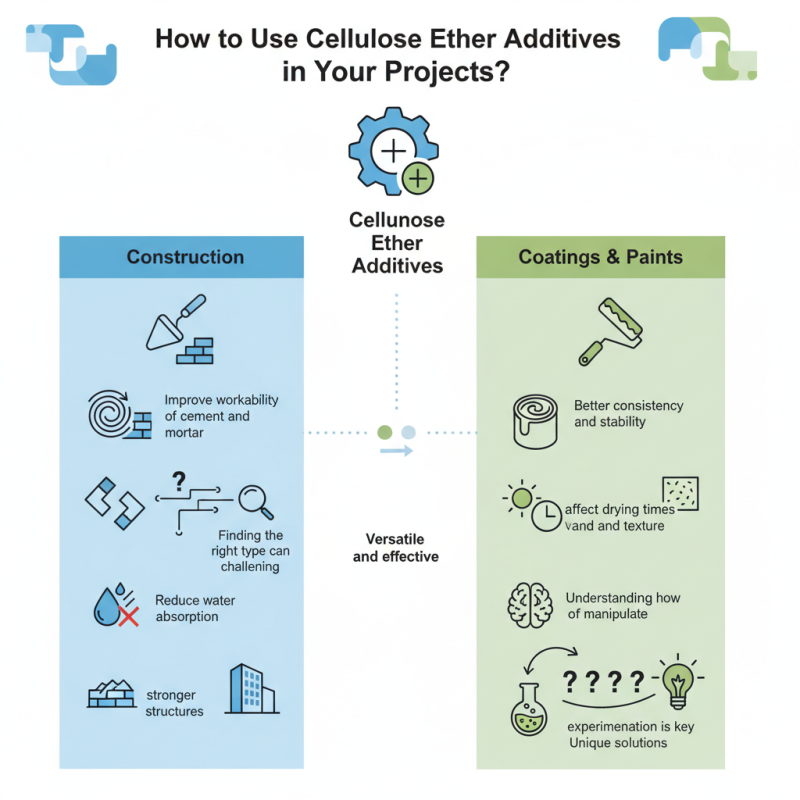
Cellulose Ether Additives play a crucial role in various projects. They enhance the properties of materials, making them more versatile and effective. This introduction explores their applications and benefits, shedding light on their importance.
When used in construction, Cellulose Ether Additives improve the workability of cement and mortar. These additives increase adhesion and reduce water absorption. This results in stronger structures. However, not all cellulose ethers are the same. Finding the right type for your specific application can be challenging.
In coatings and paints, these additives help achieve better consistency and stability. They can affect drying times and texture. Understanding how to manipulate these factors is essential for optimal results. Sometimes, these adjustments might not yield the expected outcome. Experimentation is key. Embracing the learning process can lead to unique solutions.
Understanding Cellulose Ether Additives: Types and Properties
Cellulose ether additives are versatile materials. They are derived from natural cellulose. These additives enhance various properties of products. They improve viscosity, texture, and stability. Cellulose ethers are commonly used in paints, coatings, and construction materials. Each type has unique characteristics that make it suitable for specific applications.
There are several types of cellulose ethers. Methylcellulose is known for its thickening ability. Hydroxypropyl cellulose provides great film-forming properties. Carboxymethyl cellulose has excellent water retention. Each type interacts differently with water and other components. This can affect performance in real-world applications. It’s essential to test the right cellulose ether in your project. Sometimes, you may find unexpected results. A product may not meet your expectations.
Understanding these properties is crucial. You might misjudge the right amount to use. Too little could lead to ineffective results. Too much can make the mixture too thick. Experimentation is key. It helps reveal what works best in different scenarios. Balancing these aspects requires careful scrutiny and adjustments. Don’t shy away from trial and error. Each project is a learning opportunity.
Applications of Cellulose Ethers in Construction and Coating Industries
Cellulose ethers are versatile additives in construction and coating industries. They improve the performance of various materials. These additives enhance water retention, adjust viscosity, and provide excellent adhesion. They are crucial in creating high-quality products.
When applied in construction, cellulose ethers help in making cement-based systems more workable. They allow for better manipulation of the mortar or plaster. Users often struggle with achieving the right consistency. This can lead to weak bonds or uneven surfaces. A good practice is to start with a small amount and gradually increase it. This helps in finding the right balance.
In coatings, cellulose ethers contribute to film formation. They improve the spreadability and reduce drippage. However, achieving uniformity can sometimes be tricky. Test different concentrations on a small scale before larger applications. It’s essential to monitor drying times and adjust as needed. The right cellulose ether can significantly enhance the final product’s quality.
Optimal Ratios: How Much Cellulose Ether to Use for Effectiveness
When incorporating cellulose ether additives into your projects, understanding the optimal ratios is crucial. Too little may not provide the desired effects, while too much can adversely affect the mixture's properties. A general guideline is to use cellulose ether at 1-5% of the total formulation. For many applications, starting at 2% will offer a balanced experience.
Testing different ratios helps find the right fit for your specific needs. For example, increasing cellulose ether to 3% may enhance viscosity for a smoother texture. Yet, excess can lead to clumping or uneven consistency. It’s essential to observe how your mixture behaves at varying levels. Perhaps trial and error is necessary to achieve the best results.
Always mix thoroughly and allow time for settling. This helps gauge the additive's impact properly. Some experimenters find themselves stuck, unsure of progress. Keeping notes is beneficial. Reflect on what works and what doesn't. Adjust accordingly to optimize your formulation.
Impact of Cellulose Ethers on Viscosity and Workability in Formulations
Cellulose ether additives play a crucial role in modifying the viscosity and workability of various formulations. These additives can significantly improve the performance of formulations by increasing their consistency. When mixed, they help create a stable structure. This means your product won’t separate easily or become too thick during application. However, it’s not always easy to find the right balance.
Finding the ideal viscosity level can be challenging. Too little cellulose ether might lead to a runny mixture, while too much can create a pasty texture. It’s essential to experiment with different concentrations. Start with small amounts and gradually increase. This trial and error process can be frustrating, but it’s a vital step for achieving the desired outcome. Keep track of your adjustments for future projects.
Workability is another area affected by cellulose ethers. They improve the ease of application, ensuring a smoother finish. However, this doesn’t happen automatically. Sometimes, adjustments in other aspects of the formulation are necessary. You might need to tweak pH or temperature to achieve optimal results. Anticipate some setbacks in early attempts, as perfecting these formulations often requires patience and multiple revisions.
Safety and Handling Guidelines for Using Cellulose Ether Additives
Using cellulose ether additives can enhance your projects significantly. However, safety and handling are essential considerations. Always wear gloves and goggles when working with these additives. Avoid inhaling dust during the mixing process. Basic precautions can prevent unnecessary injuries.
Store cellulose ether additives in a cool, dry place. Keep containers tightly closed to avoid contamination. Be mindful of their moisture sensitivity. Improper storage can lead to clumping and reduced effectiveness.
Remember, it's crucial to read safety data sheets. These documents provide vital information on handling and risks. A little oversight can lead to unforeseen issues. Do not rush through safety protocols; it’s easy to overlook them. Every step contributes to a safer work environment.
Usage of Cellulose Ether Additives by Application