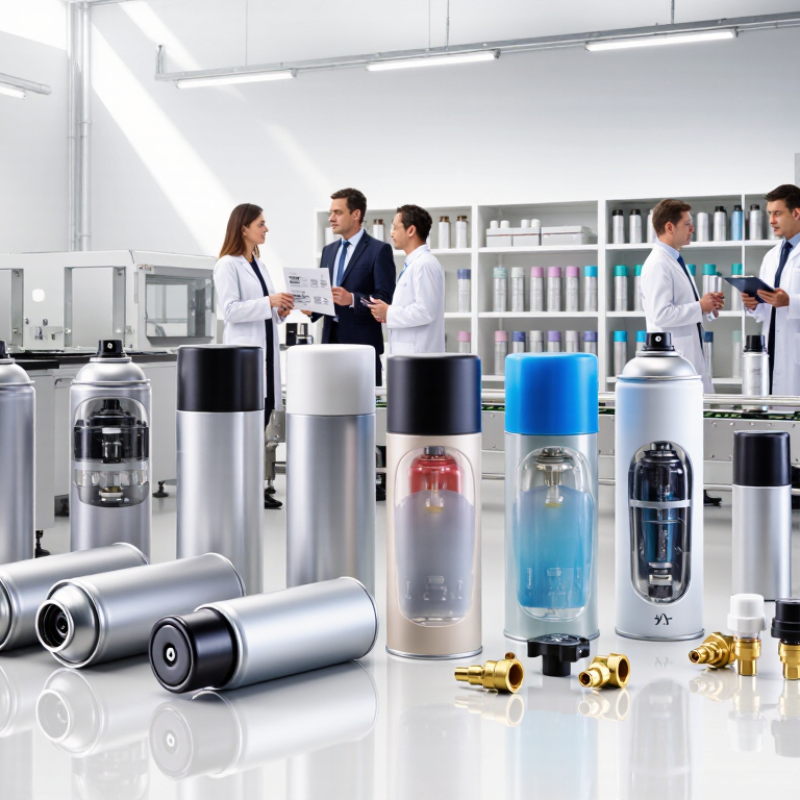
The global aerosol market is expanding, but buyers face a crowded supplier landscape. Grand View Research valued the global aerosol cans market at approximately USD 11.7 billion in 2023 and projected continued growth through 2030. Its findings point to rising demand from personal care, household products, healthcare, food, and industrial applications.
Packaging choices are changing. Metal aerosol cans remain widely used because they offer strength, pressure resistance, and efficient product protection. However, recyclable aluminum, lightweight steel, bag-on-valve systems, and lower-impact components are gaining attention. The Smithers report, The Future of Aerosol Packaging, highlights sustainability, material efficiency, dispensing performance, and regulatory compliance as major purchasing considerations. These factors matter when a can must survive filling, transport, warehouse handling, and repeated use in a bathroom cabinet or factory storeroom.
This guide examines the top 10 types of aerosol packaging companies serving global buyers. It considers manufacturers, contract fillers, component suppliers, valve specialists, and integrated packaging partners. Company capability is not measured by catalog size alone. Buyers should review filling technology, batch traceability, testing procedures, export experience, minimum order quantities, and documented quality systems.
No ranking is perfect. Markets differ.
A supplier experienced in European personal care may not suit an industrial customer in Southeast Asia. Likewise, a low unit price can hide tooling costs, longer lead times, or limited customization. The strongest aerosol packaging companies communicate clearly, support compliant product development, and provide evidence behind their claims. Data from the European Aerosol Federation, Smithers, and Grand View Research helps frame the market, but practical supplier verification remains essential.
Global aerosol packaging is a large, specialized industry. The FEA reports more than 16 billion aerosol cans filled annually worldwide. This scale supports many company types, including can manufacturers, contract fillers, valve producers, actuator suppliers, printing specialists, testing laboratories, tooling firms, line integrators, recycling providers, and custom packaging developers.
From my experience, global buyers should examine more than production volume. A reliable supplier can explain can thickness, internal coatings, valve compatibility, filling tolerances, and transport testing. Request recent quality records and sample approvals. Ask how the company manages batch traceability. Small details matter. A poor actuator fit can cause leakage, uneven spray, or difficult handling. The 16-billion-can figure shows market strength, not automatic quality. That distinction is easy to miss.
Tips: Compare at least three suppliers using the same specification sheet. Confirm certifications, filling capacity, export experience, and regional compliance before ordering. Check samples under realistic temperature and pressure conditions. Keep written approval records. Some buyers focus heavily on unit price, yet tooling changes and rejected batches can cost more later. I would also review emergency communication procedures, because a beautiful package is not enough when production stops.
Global scale: more than 16 billion aerosol cans are filled annually, according to the Fédération Européenne de l'Aérosol (FEA).
The chart compares the practical capability coverage of ten established aerosol packaging company types. The 0–5 index reflects the breadth of services typically available to international buyers, including container production, formulation, filling, valves, actuators, specialty formats, and sustainability options. It is a capability index rather than a market-share ranking.
Can manufacturers serve different production needs through ten supplier types: integrated aerosol can makers, steel can specialists, aluminum monobloc producers, tinplate processors, recycled-metal suppliers, custom-drawing factories, component manufacturers, valve suppliers, coating specialists, and contract packaging partners.
Steel cans suit many household, personal-care, and industrial formulas. They offer strong stacking performance and competitive pricing. Aluminum cans provide a lighter feel, smooth decoration, and excellent shape flexibility. Monobloc production reduces seams, but tooling costs can rise for unusual designs.
Experienced buyers should check wall thickness, dome strength, internal coating, and pressure-test records before approving samples.
Details matter.
A reliable supplier also controls flange dimensions, valve fit, lacquer adhesion, and print durability. Ask for batch traceability and documented quality inspections. Packaging compatibility must be tested with the actual formula, actuator, and filling process.
Local transport rules may require specific performance evidence, so compliance teams should review documents early. In practice, no supplier type is perfect. A low-cost steel producer may lack short-run flexibility, while a premium aluminum factory may require large minimum orders.
Lead times can shift unexpectedly. Keep a second qualified source when supply continuity matters. Supplier audits, pilot runs, and retained samples reveal problems that catalog pages often hide.
Aerosol packaging companies often specialize in different component groups. Valve specialists control opening force, flow rate, and sealing performance. Their products suit products requiring measured discharge and stable pressure. Actuator specialists shape the spray pattern, touch feel, and direction. A narrow nozzle may create a focused stream, while a wider opening produces softer coverage.
Bag-on-valve specialists separate the product from the propellant. This design can support cleaner dispensing and better product protection. It may also allow use with sensitive formulas, depending on material compatibility. Buyers should check bag films, valve dimensions, crimp depth, and internal pressure ranges. Small mismatches can cause leaks or uneven output.
Testing must reflect real use. I recommend checking ten or more filled samples for spray weight, leakage, and actuator recovery. Measure performance at different temperatures, not only in a controlled room. Transport vibration can change results.
User experience matters too. A valve may meet its specification but still feel too stiff. That part is easy to overlook.
Component suppliers should provide drawings, tolerance data, and traceable quality records. They should also explain how they handle batch variation. No design fits every formula, container, or market. My own reviews often find that early prototypes perform well, yet production samples need adjustment. That is normal, but it should be documented before scale-up.
Contract fillers and formulators turn product concepts into finished aerosol units. They support cosmetics, pharmaceutical products, and household care applications.
Experienced teams check spray pattern, dose consistency, viscosity, and container performance. Small details matter. A weak valve seal can cause leakage during storage or transport.
Global buyers should request documented quality systems, batch records, stability data, and material traceability. Pharmaceutical projects may require GMP controls, validated processes, and strict release procedures.
Cosmetic and home care products still need careful preservative, fragrance, and packaging evaluations. The supplier should also understand destination-market requirements before production begins.
A factory audit can reveal practical strengths that brochures rarely show. Look at line cleanliness, calibration records, operator training, and complaint handling.
Ask how deviations are investigated. Ask who approves formulation changes.
No supplier gets every decision right. A formula can perform well in the laboratory but behave differently inside a filled can. Humidity, temperature, and transport vibration can expose overlooked weaknesses. Pilot batches help, although they do not remove every risk.
Reliable partners communicate early when a specification seems unrealistic. They provide samples, explain limitations, and preserve clear approval records. This discipline helps buyers manage quality across cosmetics, pharma, and home care supply chains.
For global buyers comparing the top 10 types of aerosol packaging companies, supplier classification is only the beginning. Contract fillers, can manufacturers, valve specialists, actuator producers, and integrated packaging groups need evidence beyond attractive samples. GMP controls should cover hygiene, batch release, deviation handling, and recall traceability. ISO 15378 adds discipline for primary packaging materials, especially documented risk control and change management.
UN GHS checks should match the destination market, including hazard labels, safety data, and language requirements. Transport documentation also deserves review. Ask for controlled artwork records, validation reports, and recent corrective-action evidence. Certificates can expire. A clean certificate pack is not proof of a clean operation.
EPR performance must be measured with shipment-level data, not broad claims. Request material weights, recycled content, recovery routes, and country-specific reporting records. The OECD Global Plastics Outlook found 353 million tonnes of plastic waste were generated in 2019, with packaging representing about 40 percent. The UN Global Waste Management Outlook 2024 projects municipal waste could rise from 2.3 billion tonnes in 2023 to 3.8 billion tonnes by 2050. Aerosol suppliers should therefore report steel, aluminum, plastic, and mixed-material recovery separately. Recycling rates vary widely by region. Some supplier dashboards remain incomplete. Buyers should challenge missing assumptions, verify sampling methods, and retain audit trails before approving a long-term contract.
| No. | Company Type | Typical Aerosol Packaging Scope | Common Primary Materials | GMP Due-Diligence Relevance | ISO 15378 Relevance | UN GHS and Transport Checks | EPR and Recycling Metrics | Recommended Buyer Evidence | Typical Risk Level |
|---|---|---|---|---|---|---|---|---|---|
| 1 | Aluminum Aerosol Can Manufacturers | Monobloc aluminum cans for personal care, pharmaceutical, household, and technical products. | Aluminum alloy, internal lacquer, external coating, valve cup, actuator, and protective overvarnish. | Usually conditional; stronger controls are expected when cans are used for medicinal products or products manufactured under GMP. | Relevant when the can is primary packaging for medicinal products and the supplier operates within the pharmaceutical packaging supply chain. | Confirm product classification, label elements, safety data, and aerosol transport classification such as UN 1950 where applicable. | Request aluminum recycled-content percentage, post-consumer recycled content, scrap recovery rate, and recyclability by target market. | Material specification, coating compatibility data, dimensional inspection records, batch traceability, ISO certificates, and recycling declarations. | Medium |
| 2 | Tinplate Aerosol Can Manufacturers | Welded or drawn-and-ironed steel aerosol cans for cosmetics, cleaners, paints, and industrial products. | Tinplate steel, internal protective lacquer, external print coatings, valve cup, actuator, and cap. | Conditional for non-pharmaceutical products; documented hygiene, contamination prevention, and change control are important for regulated uses. | Applicable mainly where the steel can is primary packaging for medicinal products and the quality management system covers that scope. | Verify corrosion resistance, pressure performance, hazard communication, safety data sheets, and applicable UN, ADR, IMDG, or IATA requirements. | Request steel recycled-content data, ferrous-metal recovery rate, coating impact on recyclability, and country-specific EPR registration support. | Steel grade, coating migration or compatibility data, pressure and burst-test results, seam inspection records, and certificate of analysis. | Medium |
| 3 | Aerosol Valve and Actuator Suppliers | Metered-dose valves, continuous-spray valves, actuators, dip tubes, gaskets, and protective caps. | Polypropylene, polyethylene, acetal, elastomers, stainless steel, aluminum, and coated components. | High for pharmaceutical or inhalation applications because dose delivery, cleanliness, and component consistency can affect product performance. | Relevant when components are primary packaging materials for medicinal products; scope should explicitly include the supplied component. | Check compatibility with classified contents, pressure, leakage, flammability, GHS labeling inputs, and transport documentation. | Measure polymer type, component weight, separability, recycled content where permitted, and component scrap or rejection rates. | Functional test data, extractables and leachables assessment where relevant, elastomer compatibility, cleanliness controls, and lot traceability. | High for regulated products |
| 4 | Contract Aerosol Filling and Assembly Companies | Filling, crimping, propellant charging, leak testing, coding, secondary packing, and finished-goods release. | Customer-specified cans, valves, actuators, caps, labels, cartons, and shipping cases. | High when handling medicinal, disinfectant, cosmetic, or other controlled products; site hygiene and batch controls must match the product category. | Potentially highly relevant for pharmaceutical packaging operations, subject to the certified scope and actual manufacturing activities. | Confirm classification, formulation information, GHS label creation responsibility, aerosol filling limits, and dangerous-goods transport procedures. | Request packaging-weight data, production scrap rate, recovery or reuse programs, EPR data files, and packaging composition declarations. | Site audit, batch records, line-clearance records, calibration logs, leak-test results, deviation management, recall procedure, and insurance documentation. | High |
| 5 | Pharmaceutical Metered-Dose Inhaler Packaging Specialists | Pressurized metered-dose inhaler canisters, valves, actuators, dose counters, and assembly services. | Anodized aluminum, stainless steel, pharmaceutical-grade elastomers, engineering polymers, and dose-counter components. | Very high; dose uniformity, microbial control, extractables, particulate control, and validated processes are commonly critical. | Strongly relevant where the supplied components are primary packaging materials for medicinal products; verify certification scope and audit status. | Confirm medicinal-product classification, GHS applicability to the product, transport classification, and regulatory-market requirements. | Track aluminum and polymer mass, recycled content restrictions, component recyclability, and end-of-life information for each market. | Validation master plan, dose-delivery data, extractables and leachables reports, particulate results, change-control history, and supplier audit reports. | Very high |
| 6 | Cosmetic and Personal-Care Aerosol Packaging Suppliers | Packaging for deodorants, shaving products, hair styling products, body sprays, and foams. | Aluminum or tinplate cans, plastic actuators, caps, valves, labels, and decorative coatings. | Generally moderate; hygiene, product compatibility, batch traceability, and cosmetic regulatory controls remain important. | Usually not mandatory unless the packaging is supplied for medicinal products; ISO 9001 or equivalent quality controls may still be useful. | Confirm cosmetic classification, responsible-party labeling, flammability statements, SDS availability, and applicable aerosol transport rules. | Request packaging-component weights, metal recycling compatibility, plastic identification codes, recycled-content data, and EPR reporting capability. | Product compatibility testing, pressure and leak testing, artwork approval controls, social-compliance audits, and packaging composition data. | Medium |
| 7 | Household and Cleaning Aerosol Packaging Suppliers | Packaging for air fresheners, surface cleaners, disinfectants, insecticides, and polishes. | Steel or aluminum cans, corrosion-resistant internal coatings, valves, plastic actuators, caps, and printed labels. | Usually moderate; higher controls may apply to biocidal, disinfectant, or regulated chemical products. | Normally limited unless the packaging is used for medicinal products; document quality controls for coatings and closure performance. | GHS classification, pictograms, signal words, precautionary statements, SDS, child-safety considerations, and transport classification may apply. | Track steel or aluminum recovery, plastic component weight, packaging recyclability, recycled content, and EPR data by destination country. | Chemical compatibility report, corrosion testing, pressure performance, GHS label review, SDS controls, and dangerous-goods training records. | High for hazardous formulations |
| 8 | Industrial, Automotive, and Technical Aerosol Suppliers | Lubricants, rust inhibitors, paints, adhesives, release agents, maintenance sprays, and marking products. | Tinplate steel or aluminum cans, solvent-resistant coatings, precision valves, actuators, and protective caps. | Usually limited for packaging-only suppliers, but strict process controls are needed for flammable, toxic, or corrosive formulations. | Generally not applicable unless the supplied packaging is used for medicinal products; verify the certified scope before relying on ISO 15378 claims. | Often significant; verify GHS classification, flammable-aerosol categories, SDS, UN 1950 details, and modal transport requirements. | Measure metal recovery, coating and residual-content considerations, packaging weight, recycled content, and hazardous-waste handling procedures. | Pressure and leakage tests, compatibility data, hazardous-area controls, worker training, incident records, and dangerous-goods shipping documentation. | High |
| 9 | Bag-on-Valve and Barrier-Packaging Specialists | Bag-on-valve systems for creams, foams, liquids, food products, cosmetics, and pharmaceutical formulations. | Multilayer polymer or metalized barrier bags, valves, fitments, cans, actuators, and protective caps. | High for pharmaceutical, food, or sterile-related uses because barrier integrity, product-contact materials, and dispensing performance require control. | Relevant when the complete system or its primary components are used for medicinal products; confirm the exact certified scope. | Confirm contents classification, pressure behavior, GHS labeling responsibility, leak prevention, and applicable dangerous-goods transport requirements. | Report multilayer structure, polymer mass, recyclability limitations, recycled-content feasibility, and component-separation information. | Barrier-performance tests, seal-strength data, product-contact compliance, leak testing, sterilization or cleanliness validation where relevant, and traceability. | High |
| 10 | Sustainable Aerosol Packaging and Recycling-Service Providers | Recycled-content packaging, lightweighting, material recovery, design-for-recycling, and EPR data services. | Recycled aluminum or steel, recyclable polymers, reduced-material components, and optimized secondary packaging. | Depends on the application; sustainability claims cannot replace GMP, hygiene, compatibility, or validated-process requirements. | Applicable only when the supplied primary packaging is for medicinal products and the provider's management system covers the relevant activities. | Verify that sustainability changes do not affect pressure safety, GHS information, label durability, product compatibility, or transport classification. | Request PCR and post-industrial recycled-content percentages, collection and recovery rates, recyclability assessment method, carbon footprint boundary, and EPR reporting format. | Third-party verification, mass-balance or chain-of-custody records, life-cycle assessment methodology, material certificates, and market-specific EPR declarations. | Medium to high |

| Cookie | Duration | Description |
|---|---|---|
| cookielawinfo-checkbox-analytics | 11 months | This cookie is set by GDPR Cookie Consent plugin. The cookie is used to store the user consent for the cookies in the category "Analytics". |
| cookielawinfo-checkbox-functional | 11 months | The cookie is set by GDPR cookie consent to record the user consent for the cookies in the category "Functional". |
| cookielawinfo-checkbox-necessary | 11 months | This cookie is set by GDPR Cookie Consent plugin. The cookies is used to store the user consent for the cookies in the category "Necessary". |
| cookielawinfo-checkbox-others | 11 months | This cookie is set by GDPR Cookie Consent plugin. The cookie is used to store the user consent for the cookies in the category "Other. |
| cookielawinfo-checkbox-performance | 11 months | This cookie is set by GDPR Cookie Consent plugin. The cookie is used to store the user consent for the cookies in the category "Performance". |
| viewed_cookie_policy | 11 months | The cookie is set by the GDPR Cookie Consent plugin and is used to store whether or not user has consented to the use of cookies. It does not store any personal data. |