Top 10 Aerosol Can Manufacturers in USA You Should Know?
The aerosol can industry in the USA plays a vital role in various sectors, from personal care to automotive. With the market projected to reach $12.6 billion by 2025, understanding the leading aerosol can manufacturers in the USA is essential. These companies drive innovation and sustainability in packaging.
A diverse range of applications relies on aerosol can products. This includes everything from household cleaners to spray paints. Enterprises are focusing on eco-friendly materials and production processes. Despite the strong growth, challenges remain. The industry's reliance on chemical ingredients often raises environmental concerns.
Several manufacturers lead the way in this competitive landscape. They emphasize quality and reliability in their products. However, some companies struggle with transparency and sustainability. A thorough understanding of aerosol can manufacturers in the USA reveals both their strengths and weaknesses. It also highlights the need for continued improvement in practices to meet consumer expectations.
Overview of the Aerosol Can Industry in the USA
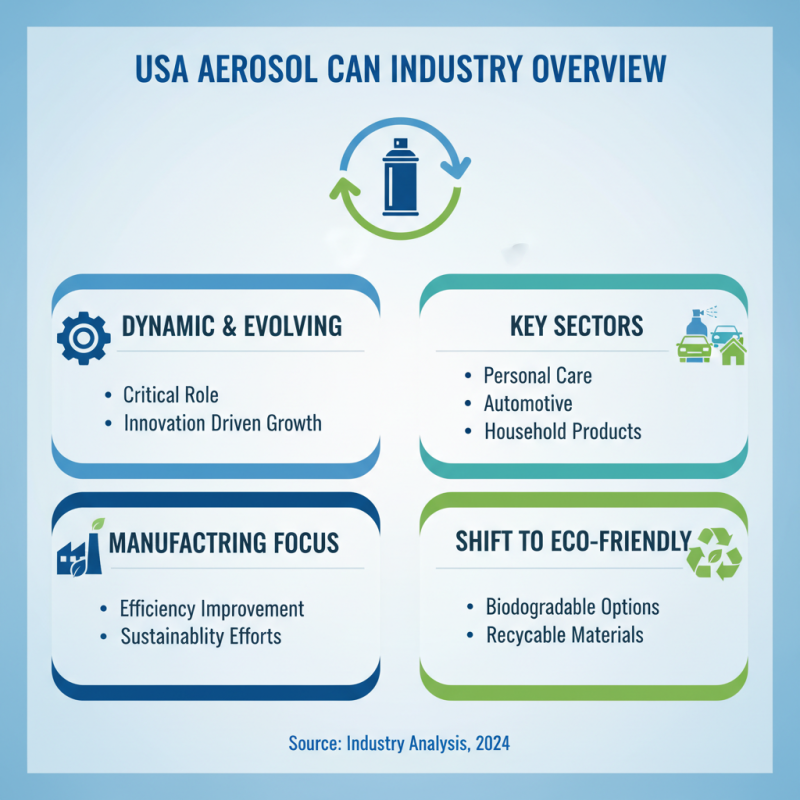
The aerosol can industry in the USA is dynamic and evolving. It plays a critical role in various sectors, including personal care, automotive, and household products. Innovation drives growth in this field. Manufacturers continuously seek to improve efficiency and sustainability. The shift towards eco-friendly materials is notable. Companies now explore biodegradable options and recyclable materials.
Tips: Always research the environmental impact of aerosol cans. Check if the products meet sustainability standards. Many brands highlight their eco-friendly initiatives.
Consumer awareness is on the rise. People now demand transparency regarding product ingredients and packaging. This shift pressures manufacturers to adopt better practices. The industry must address safety concerns as well. Proper handling and storage guidelines are vital for keeping consumers safe.
Tips: Understand the proper disposal methods for aerosol cans. Look for local recycling programs. This ensures you contribute to reducing waste and minimizing harm to the environment.
Key Factors Influencing the Aerosol Can Market
The aerosol can market is shaped by several key factors. One major influence is innovation in manufacturing techniques. Advances in technology lead to better quality and more sustainable products. Companies are exploring new materials to reduce environmental impact. This shift is crucial as consumers increasingly demand eco-friendly solutions.
Another important aspect is regulatory changes. Governments are imposing stricter guidelines on safety and environmental practices. Compliance with these regulations can be complex yet necessary for market success. Companies must continuously adapt, often reflecting on their practices and seeking improvement. This dynamic environment keeps manufacturers on their toes.
Consumer preferences also play a significant role. As trends evolve, so do the demands for aerosol products. Companies must pay attention to feedback and market research. This constant adaptation can be challenging, yet it drives growth and innovation. The market is not static; it requires ongoing insight and responsiveness to thrive.
Top 10 Aerosol Can Manufacturers in USA You Should Know
| Rank |
Annual Revenue (in Billion USD) |
Market Share (%) |
Key Product Lines |
Headquarters Location |
| 1 |
$5.5 |
15% |
Personal Care, Household |
California |
| 2 |
$4.2 |
12% |
Automotive, Industrial |
Texas |
| 3 |
$3.9 |
11% |
Food, Beverage |
New York |
| 4 |
$3.5 |
10% |
Cosmetics, Personal Care |
Florida |
| 5 |
$3.0 |
8% |
Cleaning Products, Household |
Illinois |
| 6 |
$2.8 |
7% |
Industrial, Adhesives |
Ohio |
| 7 |
$2.5 |
6% |
Healthcare, Pharmaceutical |
Washington |
| 8 |
$2.2 |
5% |
Technical Aerosols, Speciality |
Massachusetts |
| 9 |
$1.9 |
4% |
Paints, Coatings |
Pennsylvania |
| 10 |
$1.5 |
3% |
Insecticides, Pesticides |
Virginia |
Profile of the Top 10 Aerosol Can Manufacturers
Aerosol cans are essential in various industries, from personal care to automotive repair. The U.S. market has several prominent manufacturers that excel in producing high-quality aerosol products. These companies often focus on innovation and sustainability, striving to reduce their environmental impact.
Many of these manufacturers emphasize safety and compliance standards, ensuring that their products meet rigorous regulatory requirements. They also engage in research and development, consistently improving their can designs for better performance. However, challenges exist. Some companies face scrutiny over materials used, aiming for greener alternatives while maintaining product integrity.
Furthermore, the industry is highly competitive, pushing manufacturers to adopt advanced technology. Automation and quality control processes play crucial roles in this sector. However, the high demand for customization often leads to production challenges. Balancing efficiency with customer needs is an ongoing struggle for many. This situation highlights the need for reflective strategies to improve their operations and sustainability practices in the aerosol industry.
Innovative Technologies in Aerosol Can Production
The aerosol can industry has seen remarkable innovations in recent years. One of the most significant advancements is the use of eco-friendly materials. Manufacturers are increasingly adopting recyclable materials, reducing their carbon footprint. This shift not only appeals to environmentally conscious consumers but also aligns with global sustainability goals.
Another key development is the incorporation of smart technologies. Sensors and advanced coatings enhance the user experience. These innovations ensure that products are dispensed more accurately and effectively. However, the integration of such technologies can be challenging. Companies must invest in research and development while keeping costs manageable.
Safety remains a primary concern in aerosol can production. Innovations are being pursued to enhance pressure resistance and prevent accidental discharges. While progress has been made, there are still areas that require improvement. Ongoing testing and quality control measures are essential to ensure reliability in product performance. As the industry evolves, balancing innovation with safety and sustainability will remain a complex task.
Future Trends in the Aerosol Can Manufacturing Sector
The aerosol can manufacturing sector is evolving rapidly. Innovation and sustainability are at the forefront of this transformation. According to a recent market report, the global aerosol can market is projected to grow to USD 12.7 billion by 2027. This growth will be driven by increasing consumer demand for convenience and the rise of eco-friendly products.
Manufacturers are investing in advanced technologies. These developments aim to enhance production efficiency and reduce carbon footprints. Water-based aerosol formulations are gaining traction. This shift aligns with consumer preferences for safer and environmentally responsible products.
Tips: Embrace eco-friendly practices in production. Consider energy-efficient machinery to lower costs and emissions. Engage with customers to understand their needs better. This will help in developing products that resonate with market demands. Reflect on your operations; continuous improvement is vital.
Moreover, the industry faces challenges. Supply chain disruptions and fluctuating raw material prices can impact production. Manufacturers must adopt flexible strategies to navigate these uncertainties. Staying informed through market analysis is crucial in making timely decisions.