
Choosing the right Thermal Shipping Labels 4x6 begins with the real conditions of your shipping workflow. A label may pass a desk test, then fail beside a cold loading dock. Paper quality, adhesive strength, printer compatibility, and barcode contrast all matter. So does the surface: corrugated cardboard absorbs differently than recycled mailers. Small details become expensive quickly.
Jody Bradshaw, a recognized Zebra Technologies supplies specialist, once said, “A label is part of the scanning system, not merely a sticker.” That principle deserves attention. The best Thermal Shipping Labels 4x6 should produce sharp barcodes, clean text, and consistent feeding through the printer. Direct thermal stock suits many short-term shipping applications because it needs no ink ribbon. Yet heat, sunlight, and long storage can darken or fade the image. I have seen attractive labels fail after a damp warehouse night.
Check the core size, roll direction, printer settings, and adhesive before purchasing large quantities. Test several cartons, not one perfect box. Compare peeling force, smudging, curl, and scan performance. A cheaper roll may create reprints and delays. The premium option may also be wrong if its adhesive is too aggressive. This is where judgment remains imperfect. Product descriptions rarely reveal every warehouse variable. Measure your own process, record the results, and choose the label that performs reliably under actual shipping pressure.
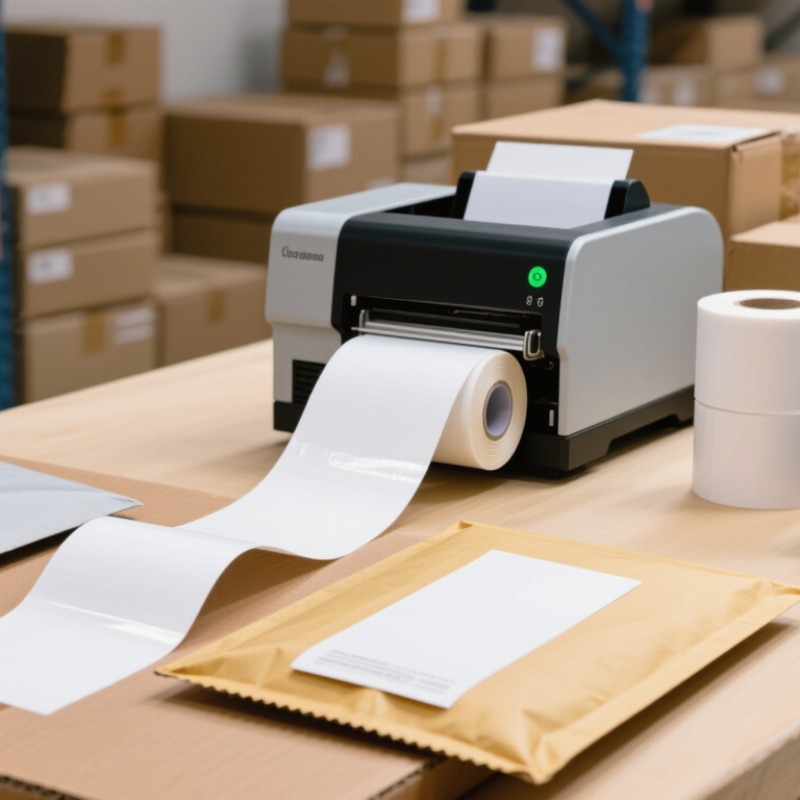
Choosing the best 4x6 thermal shipping label starts with defining its key specifications. The 4x6-inch size fits many standard shipping workflows, but measurement still matters. Check the actual label dimensions, roll direction, and core diameter before ordering. A mismatch can cause feeding problems and wasted labels.
Direct thermal labels need no ink or toner. Their coating reacts to heat from the printer. Choose a smooth, consistent surface for sharp barcodes and readable text. Adhesive strength is equally important. Paper, corrugated boxes, plastic mailers, and cold storage surfaces may require different adhesive performance. Consider moisture resistance, surface temperature, and expected storage time. I once overlooked humidity, and a clear barcode became difficult to scan. That mistake changed my testing process.
Tips: Print a sample before buying in bulk. Check barcode clarity, edge alignment, peeling, and adhesion after twenty-four hours. Test both dense black areas and small text. Also confirm printer compatibility, label gap spacing, and roll length. A label may look perfect on one printer but shift on another. Keep records of test results. They make supplier comparisons more reliable. Avoid judging quality by whiteness alone; coating uniformity matters more. Some specifications remain unclear until real packages are tested, so leave room for practical review.
Choosing a 4x6 thermal shipping label starts with the printer, not the carton. Direct thermal labels react to heat and need no ribbon. They suit parcels moving through short, indoor routes. Thermal transfer labels use a ribbon and usually resist heat, moisture, and abrasion better. Check the printer’s media settings before buying a full case. A roll can look right and still feed poorly.
For refrigerated shipments, humid loading docks, or rough handling, choose a moisture-resistant face stock and strong adhesive. A paper label may curl after condensation forms on a cold box. Synthetic stock handles splashes better, but it can cost more and require different heat settings. Test one label on corrugated cardboard. Rub it with a damp finger, bend the box, and scan the barcode under dim light. Small tests reveal failures early.
Adhesive choice also matters. Dusty, recycled surfaces may need a stronger bond. Clean, smooth packaging can work with standard adhesive. Avoid placing labels across seams, corners, or heavy tape. I once blamed the printer when the real problem was a cold carton. That mistake changed our process. We now record temperature, surface type, print darkness, and scan results during trials. The test sheet is simple, but it catches problems before a busy shipping day.
Choosing a 4x6 thermal shipping label starts with its adhesive. Permanent adhesive suits cardboard cartons and standard warehouse handling. Removable adhesive works better on reusable totes or smooth plastic surfaces. Test both on dusty, cold, and recycled packaging. A label that sticks in the office may fail inside a refrigerated truck.
The 2024 Smithers market analysis identifies continued growth in digitally printed packaging and stronger demand for reliable variable data. That matters because shipping labels carry changing addresses, barcodes, and tracking numbers. Direct thermal labels need a balanced coating. Too sensitive, and heat creates dark streaks. Too weak, and small barcode lines appear gray. ISO/IEC 15415 barcode grading helps evaluate contrast, edge definition, and readability. Ask for verified scan results, not only attractive sample images.
Durability depends on exposure. The American Society for Testing and Materials’ peel-adhesion method, ASTM D3330, provides a useful comparison framework. Check adhesion after 24 hours, then after rubbing, moisture, and temperature changes. A label may pass a quick desk test. It may still fail after vibration.
Printer compatibility also deserves attention. Confirm the roll core, outside diameter, liner release, and print darkness range. Cheap labels can create more waste through reprints. I have found that slightly stronger adhesive is not always better; it can tear cartons or leave residue. The practical choice is the weakest adhesive that survives the full delivery route.
How to Choose the Best 4x6 Thermal Shipping Labels
Choosing the best 4x6 thermal shipping labels starts with the printer’s feeding system, not label appearance. I check roll width, core diameter, and outer diameter before ordering. A suitable-looking roll may wobble on the holder or scrape the guide rails. That mismatch causes crooked prints, pauses, and wasted labels. Confirm whether the printer accepts rolls, fanfold stacks, or both. Stack labels need a flat path and consistent perforations. Rolls need smooth unwinding and clearance around the spindle. Test 20 to 30 labels. Watch for curling, shifting, and sensor errors. Real conditions matter more than a specification sheet.
Tips: Measure the loaded roll, not only the empty core. Leave clearance around the package. Check adhesion on corrugated boxes, poly mailers, and recycled cartons. Dust can reduce grip. Inspect backing and perforation quality, too. A weak seam may tear during fast packing. Keep labels sealed until use. Heat and humidity can change adhesive behavior. I once approved labels after a clean test, then found edge lifting on dusty cartons. That mistake was avoidable.
Packaging compatibility affects storage and handling. A compact roll may fit the printer but arrive crushed inside a loose carton. Choose packaging that protects corners, limits moisture exposure, and keeps rolls aligned. For stacked labels, packaging should resist bending and preserve even edges. Request samples from the same production specification, not a similar size. Record printer settings, media dimensions, and test results. If performance changes between batches, investigate before increasing the order. Reliable selection means repeatable feeding, clean scans, and fewer interruptions.
Compatibility comparison for roll, fan-fold stack, and packaged 4x6 thermal labels across common printer and handling requirements.
Scores use a 0–100 compatibility scale based on common 4x6 thermal-printer requirements. Roll labels generally perform best for high-volume feeding, while stacked formats can simplify storage and reduce roll-holder constraints. Always confirm printer feed direction, core size, maximum media diameter, label spacing, and packaging protection before purchasing.
Choosing the best 4x6 thermal shipping labels starts with your actual shipping workflow. Measure packages, printer settings, and daily label volume before comparing prices. A low-cost roll may save money, but poor adhesive can create reprints, delays, and customer complaints. Small savings disappear quickly.
For compliance, select labels that produce sharp, durable barcodes and readable addresses. Test them with your shipping software and scanning equipment. The label should remain legible after handling, moisture, and ordinary temperature changes.
Thermal sensitivity also matters. Some labels darken too easily during storage. Others fade when exposed to heat or sunlight. Keep shipment records and follow current carrier and customs requirements.
Shipping conditions should guide the adhesive choice. Use stronger adhesion for textured cartons, recycled boxes, or cold storage. Smooth cardboard may need less aggressive adhesive. In warehouse trials, I have found that a label can look perfect at printing but lift at the corners later. That mistake is easy to miss. Test a small batch first, then inspect labels after packing, stacking, and transport simulation. Consider roll length, core size, and printer compatibility to reduce downtime. A slightly higher unit cost may be reasonable when it prevents waste. Still, do not assume premium labels always perform better. Compare samples under your real conditions, record failures, and revise the choice when evidence changes.
| Cookie | Duration | Description |
|---|---|---|
| cookielawinfo-checkbox-analytics | 11 months | This cookie is set by GDPR Cookie Consent plugin. The cookie is used to store the user consent for the cookies in the category "Analytics". |
| cookielawinfo-checkbox-functional | 11 months | The cookie is set by GDPR cookie consent to record the user consent for the cookies in the category "Functional". |
| cookielawinfo-checkbox-necessary | 11 months | This cookie is set by GDPR Cookie Consent plugin. The cookies is used to store the user consent for the cookies in the category "Necessary". |
| cookielawinfo-checkbox-others | 11 months | This cookie is set by GDPR Cookie Consent plugin. The cookie is used to store the user consent for the cookies in the category "Other. |
| cookielawinfo-checkbox-performance | 11 months | This cookie is set by GDPR Cookie Consent plugin. The cookie is used to store the user consent for the cookies in the category "Performance". |
| viewed_cookie_policy | 11 months | The cookie is set by the GDPR Cookie Consent plugin and is used to store whether or not user has consented to the use of cookies. It does not store any personal data. |
