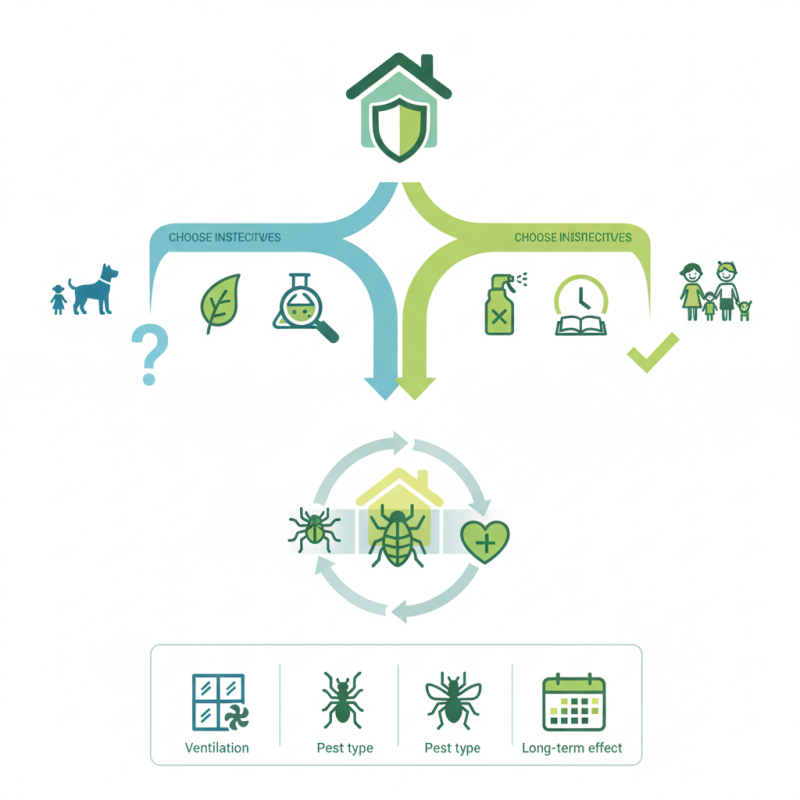
How to Choose the Best Household Insecticide for Your Home?
Choosing the right Household Insecticide for your home can feel overwhelming. With numerous options on the market, each claiming effectiveness, it's essential to make an informed decision. Your family’s health and your pets' safety should always be top priorities.
Consider the environment of your home. Are there pets present? Do you have small children? Some insecticides can be harmful. Read the labels carefully before committing. Pay attention to active ingredients and their potential risks.
You might find yourself attracted to products with strong scents or instant results. However, it’s essential to reflect on long-term safety and effectiveness. Not every product works for every pest. Take time to research and choose wisely. The right Household Insecticide not only eliminates pests but also ensures a safe environment for everyone at home.
Identifying Common Household Pests in Your Home
Identifying common household pests is the first step in choosing the right insecticide. Many homes face issues with ants, cockroaches, and spiders. These pests can invade kitchens, bathrooms, and living areas. Ants often march in long lines, attracted by food. Cockroaches lurk in dark corners. Spiders weave webs in quiet spaces, sometimes causing fear.
Tips: Keep your kitchen clean. Wipe surfaces daily to eliminate food particles. Seal cracks and openings in walls. This reduces entry points for pests. Regularly check for signs of infestations. Early detection can simplify control efforts.
Some pests are tricky. Bed bugs hide in mattress seams. Termites quietly damage wood structures. Recognizing these pests is crucial. Look for droppings or damaged materials. Understand their behavior to choose an effective treatment. Consider what works best for each type. Personal safety matters too, so read labels carefully.
Tips: Research natural insecticides as alternatives. These may be less harmful to pets and humans. Ensure to ventilate areas well when using any product. Following these guidelines helps make informed decisions. You must be proactive in your approach to pest control. Ignoring signs can lead to bigger problems later on.
Understanding Different Types of Household Insecticides
When choosing a household insecticide, understanding the various types is crucial. There are sprays, baits, and traps. Each type has a specific function. Sprays provide immediate results. They can kill on contact. However, their effects can be temporary. It is essential to reapply as needed.
Baits attract insects and poison them over time. They are discreet. But, baits may take longer to show results.
Traps are another option. They can capture and kill insects without chemicals. This is safer for pets and children. However, traps can be less effective in large infestations. It is vital to consider the type of insects you are dealing with. Some products are designed for specific pests. Others can be broad-spectrum. Always read the labels carefully. They provide important safety information.
Think about your environment as well. Some insecticides have strong odors. This can be problematic in small, confined spaces. Others may leave residues. Reflect on how often you encounter pests. A long-term solution might be preferable if you face repeated issues. Consider your lifestyle and the level of infestation when selecting the right product. It can be a process of trial and error.
Evaluating Safety and Environmental Impact of Insecticides
When choosing a household insecticide, safety and environmental impact are critical. Many products contain chemicals that can harm both humans and pets. Always check for toxicity levels. This information is typically available on the packaging. Some insecticides can cause respiratory issues or skin irritation. Consider your loved ones and how these products might affect them.
Environmental considerations are also vital. Many insecticides can wash away during rainstorms, polluting nearby water sources. They can harm beneficial insects like bees and butterflies. Opt for formulations that are biodegradable or less persistent in the environment. Look for naturally derived options, which might be less harmful but just as effective.
It's worth noting that effectiveness can come with trade-offs. Eco-friendly options often take longer to work. Users may need to apply them more frequently. Not every solution will fit all situations. Finding the right balance between safety, effectiveness, and environmental responsibility is challenging. It may require experimentation. Always remain mindful of the broader implications of your choices.
How to Choose the Best Household Insecticide for Your Home? - Evaluating Safety and Environmental Impact of Insecticides
| Insecticide Type | Effectiveness | Safety for Humans | Environmental Impact | Recommended Use |
| Pyrethroid | High | Moderate | Moderate | Indoor and Outdoor |
| Insecticidal Soap | Moderate | High | Low | Indoor Plants |
| Neem Oil | High | High | Low | Garden Use |
| Boric Acid | High | Low | Moderate | Indoor Use |
| Diatomaceous Earth | Moderate | High | Low | Indoor and Outdoor |
Choosing the Right Application Method for Effectiveness
When choosing an insecticide, the application method is crucial for effectiveness. Spray is common, allowing for quick coverage of surfaces. It's great for treating visible pests, like ants or roaches. However, it can oversaturate areas, leading to waste. Use it judiciously to avoid this.
Granules are another option. They target pests in the soil or in hard-to-reach places. Just sprinkle them where you see activity. They can take longer to work, and you need to ensure pets don’t access them. Determining the right placement is key.
Baits can be highly effective but often require patience. Place baits where pests frequent. This method lures insects, ensuring they consume the poison over time. Yet, not all insects will find the bait. Sometimes, it might go untouched, making careful placement essential. Experimenting with different methods can yield better results as you learn what works best for your home.
Reading and Interpreting Insecticide Labels for Proper Use
When selecting a household insecticide, understanding the label is crucial. Insecticide labels provide essential information on active ingredients and their effectiveness. Look for specific targets, such as ants or roaches. This helps narrow down your choices. Some products may protect against multiple pests, while others focus on one.
Pay close attention to application instructions. Certain insecticides may require dilution or specific protective clothing. Application methods can vary too. Some are sprays, while others come in granular form. Misusing a product can lead to ineffectiveness and safety risks. For instance, exceeding the recommended dosage doesn't guarantee better results.
Always check for safety precautions. Labels often highlight necessary steps to protect pets and children. Some products require evacuation of the area post-application. Reading and understanding these details ensures a safer home environment. Not all insecticides are suitable for every situation. The learning process includes trial and error, reflecting on past choices when pests remain a problem. Be observant and informed, and let experience guide your decisions.
Household Insecticide Effectiveness Comparison