Best Caesium Clock Uses and Accuracy Explained?
Caesium Clocks represent the pinnacle of timekeeping technology. They are known for their exceptional accuracy, with a precision of one second in over 30 million years. Such accuracy has profound implications for various sectors, including telecommunications and global positioning systems. According to a recent report from the National Institute of Standards and Technology, these clocks help synchronize networks and maintain the reliability of GPS systems.
Dr. Emily Carter, a leading expert in the field, stated, “Caesium clocks are fundamental for modern technology and science.” Her insights highlight the critical role these clocks play in our daily lives. However, the technology is not without its challenges. The need for constant calibration and maintenance can sometimes outweigh the benefits.
In industries where precision is crucial, the reliance on Caesium clocks raises critical questions. Despite their advancements, errors can still occur. This unpredictability prompts a reevaluation of our dependence on these timekeeping devices. Understanding both their strengths and limitations is essential for future developments in this field.
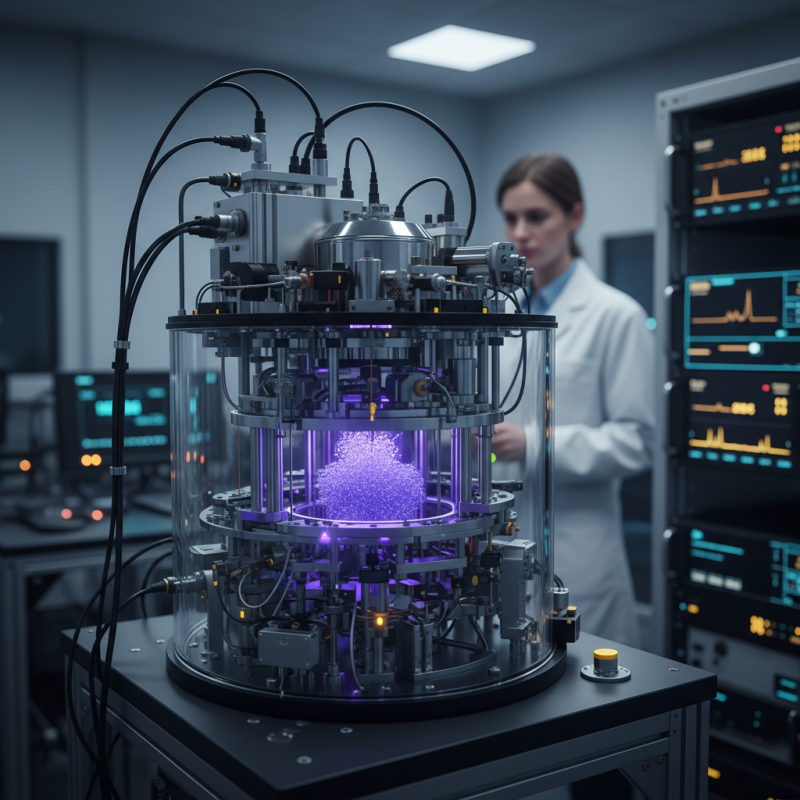
Understanding Caesium Clocks: A Brief Overview of Their Functionality
Caesium clocks are vital precision instruments. They measure time based on the vibrations of caesium atoms. The atoms resonate at a frequency of exactly 9,192,631,770 cycles per second. This consistency makes them the standard for defining a second.
Despite their accuracy, caesium clocks are not perfect. Small variations can occur due to environmental factors. Temperature and magnetic fields may influence the results. Scientists constantly seek to improve these systems. Even slight enhancements can lead to significant timekeeping advancements.
While caesium clocks are indispensable for GPS and telecommunications, their complexity poses challenges. Calibration requires meticulous attention. Errors, even those that seem tiny, can lead to problems in navigation systems. Ongoing research aims to make these clocks more robust and user-friendly. Balancing precision and practicality remains a key focus.
Historical Development of Caesium Clocks and Their Role in Timekeeping
Caesium clocks represent a significant advancement in timekeeping. Their development dates back to the 1950s. Researchers found that caesium atoms oscillate at a very stable frequency. This property made caesium ideal for precise time measurement.
These clocks measure time based on the vibrations of caesium atoms. One second is defined by 9,192,631,770 oscillations of these atoms. This definition ensures remarkable accuracy, often within one second over millions of years. However, even the best clocks face challenges. Environmental factors like temperature can affect their precision. Calibration requires careful monitoring and adjustments.
Tips: When using timekeeping devices, consider the environment. Small changes can lead to significant errors. Ensure regular maintenance to uphold accuracy. Always stay informed about advancements. The field of atomic timekeeping is evolving rapidly. New technologies may soon improve existing systems. Being adaptive can save time in the long run.
Precision and Accuracy: How Caesium Clocks Measure Time
Caesium clocks are marvels of precision. They rely on the consistent oscillations of caesium atoms to define the second. According to the National Institute of Standards and Technology (NIST), these clocks can achieve an accuracy of one second over millions of years. That’s staggering, but there's still room for improvement.
Each caesium atom oscillates at a specific frequency: 9,192,631,770 times per second. This consistency ensures that timekeeping remains rigorous. However, external factors like temperature and electromagnetic interference can impact readings. Even slight fluctuations can lead to errors, which accumulate over time. Researchers strive to isolate these variables in laboratory conditions, yet it's challenging.
Precision is crucial in various fields. Global Positioning Systems (GPS) depend on these timekeepers to synchronize signals accurately. A mere millisecond delay can result in significant positional errors on the ground. In telecommunications, precise time measurement ensures data packets arrive in order. Yet, the quest for better accuracy continues. Emerging technologies aim to reduce the impact of environmental factors while optimizing atomic standards. There’s potential for even greater precision in future timekeeping systems.
Applications of Caesium Clocks in Science and Technology
Caesium clocks play a critical role in science and technology. They are the backbone of global positioning systems (GPS). Accuracy is key here. According to a 2022 report by the National Institute of Standards and Technology, cesium atomic clocks provide precision up to one second in 30 million years. This is remarkable but not perfect.
These clocks also influence telecommunications. They help in synchronizing data transmission across networks. Inaccuracies can lead to severe disruptions. A tiny error can cause data loss, affecting millions. The reliance on optimal timekeeping is evident in 5G technology too. Fast data speeds require reliable timing systems.
However, not everything is flawless. Cesium clocks can be expensive to maintain. Their facilities require a controlled environment. This creates challenges in resource allocation, especially in developing regions. Exploring alternative timekeeping technologies might be important. Some newer systems show promise in achieving similar or better accuracy at lower costs. This could reshape the industry landscape in the coming years.
Future Innovations and the Evolution of Timekeeping Technologies
The evolution of timekeeping technologies has come a long way from sundials to atomic clocks. Now, caesium clocks stand at the forefront. They define time with incredible precision. Yet, their accuracy is not flawless; researchers still seek improvements. Each tick can be affected by environmental factors, which challenge the ideal accuracy.
Future innovations may introduce better materials and methods for more reliable timekeeping. Quantum technologies are on the horizon, offering even more precision and robustness. Imagining a world where time is measured without error seems ideal. However, practicality often falls short. Integrating these new technologies into existing systems proves complex.
What if we could create a timekeeping system immune to environmental disruptions? The quest for a perfect clock continues. Engineers and scientists face many hurdles. They must balance advancements with real-world applicability. This delicate dance dictates the future of our understanding of time. The pursuit for enhancement is as crucial as the goal itself.