
Choosing the right Vacuum Seal Pouches can affect product freshness, shipping efficiency, and customer trust. For global buyers, the decision involves more than comparing price per bag. Material structure, seal strength, oxygen resistance, puncture protection, and storage conditions all deserve careful review.
In real purchasing work, a pouch may look strong but fail around sharp bones, frozen edges, or uneven seals. A reliable evaluation should include sample testing, repeated sealing, drop checks, and temperature trials. Buyers should also verify food-contact documentation, factory quality controls, traceability, and packaging specifications before placing large orders. Requirements can differ by destination market, product category, and intended use. Professional suppliers should provide clear technical data instead of vague performance claims.
The 2026 market will likely reward practical designs, stable supply, and measurable quality. Smooth pouches may suit automated packing lines, while textured options can support external vacuum machines. Thicker films offer added protection, but they may increase material use and freight costs. That trade-off deserves attention. Sustainability claims also need evidence, especially when recyclable structures require specific collection systems.
No single pouch fits every product. Even experienced buyers can overlook seal width, storage humidity, or carton compression during transport. This guide compares important specifications, supplier questions, testing methods, and application details for international procurement teams. It aims to support informed decisions, not promise a perfect answer. Small tests often reveal more than polished catalogs.
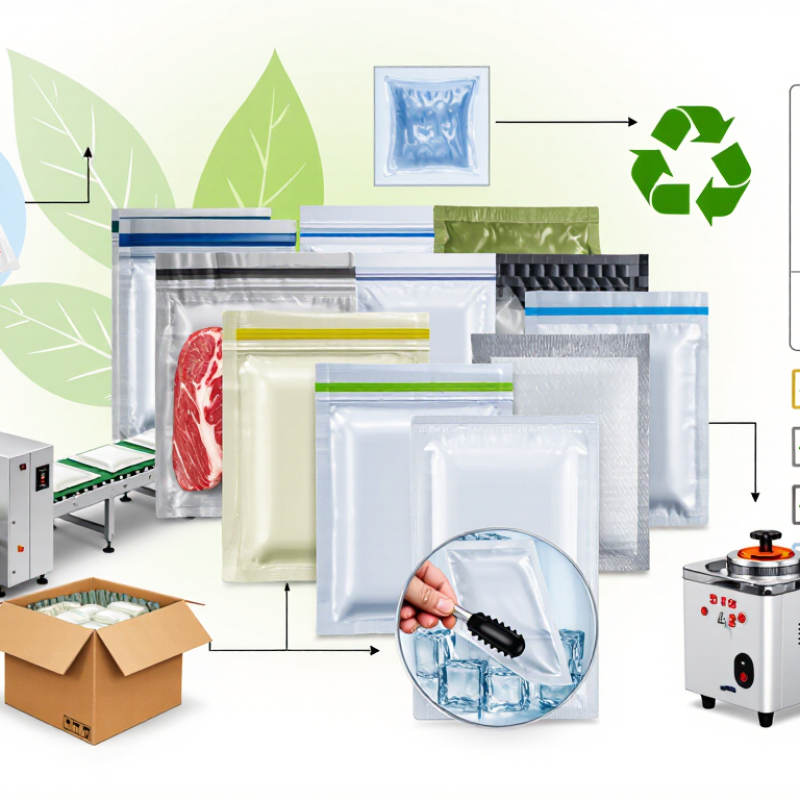
Vacuum seal pouches are flexible, multilayer bags designed to protect items from air, moisture, and outside odors. They commonly combine plastic films with a barrier layer. This structure improves strength and limits oxygen transfer. The textured side helps household sealers remove air evenly. The smooth side supports heat sealing.
Not magic.
During sealing, a machine pulls air from the pouch through its textured channels. It then heats the open edge until the layers bond together. The finished seal should look continuous, flat, and free from wrinkles. If moisture reaches the sealing area, the bond may weaken. I once assumed a powerful pump solved every problem. It did not. A badly positioned item can still create leaks. Leave enough space above the contents, and wipe the inner edge before sealing.
Global buyers should compare thickness, barrier performance, seal width, and temperature tolerance. A thicker pouch usually resists punctures better, especially around sharp frozen edges. However, thicker material can cost more and may require careful machine settings. Pouch dimensions also matter; excessive empty space wastes film and storage room. Transparent material makes inspection easier, while printed surfaces can improve handling information. Reliable suppliers should provide material details, production records, and food-contact documentation when applicable. Ask for sample pouches. Test them with real contents, because laboratory claims may not match daily use.
In 2026, vacuum seal pouch performance depends more on barrier design than appearance. The right structure protects product quality during storage, transport, and handling. Material selection should follow the product’s actual risks.
Polyamide and polyethylene remain useful for flexible pouches. Polyamide adds puncture resistance, while polyethylene supports reliable heat sealing. For products sensitive to oxygen, an EVOH layer can reduce oxidation. Aluminum foil offers stronger protection from oxygen, moisture, and light, but it may reduce flexibility and complicate recycling goals. PET-based outer layers can improve printing strength and surface durability. Every layer has a job.
Barrier levels must match the supply route. Long ocean transport may expose pouches to humidity, temperature changes, and rough handling. A high-barrier structure can help, but thicker is not always better. It may increase material use without improving shelf life. Test oxygen transmission, water vapor transmission, seal strength, and puncture resistance under realistic conditions. Do not test only new pouches. A slightly damaged seal can fail after repeated movement.
Seal performance matters.
Buyers should also review pouch dimensions, vacuum compatibility, and storage temperatures. A strong film can still perform poorly if the sealing window is narrow or the pouch contains sharp edges. Recyclable mono-material options deserve attention, yet they may not equal multilayer structures in every barrier requirement. This trade-off needs honest testing, not optimistic assumptions.
2026 Best Vacuum Seal Pouches for Global Buyers?
How to Compare Pouch Types for Food and Non-Food Applications
For global buyers, pouch selection starts with the product, not the advertised material. Food applications often require multilayer pouches with oxygen, moisture, and light barriers. Polyamide can improve puncture resistance, while polyethylene supports reliable heat sealing. Retort pouches need heat-resistant structures. Standard vacuum pouches may suit chilled meat, cheese, or dry ingredients. They are not interchangeable. A pouch that protects coffee may fail against sharp frozen bones.
FAO’s The State of Food and Agriculture 2019 estimates that 14% of food is lost between harvest and retail. Better packaging can reduce exposure to oxygen, leaks, and handling damage, but only when the barrier matches storage conditions. Ask for oxygen transmission rate, water vapor transmission rate, seal strength, and actual shelf-life testing. ASTM F88 can help evaluate seal strength, while ASTM D3078 supports leak testing. Supplier claims alone are insufficient. I have seen attractive pouches underperform because the seal area was contaminated with oil.
Non-food products need different priorities. Powders require dust-resistant seals, while oily liquids may need chemical compatibility testing. Hardware and sharp components need stronger puncture resistance than clothing or soft goods. UNEP’s Food Waste Index Report 2024 estimates that 1.05 billion tonnes of food were wasted in 2022, showing why food packaging efficiency matters. Yet sustainability choices remain imperfect. A thinner pouch may reduce shipping weight, but a complex barrier can complicate recycling. Buyers should compare total material use, transport conditions, filling equipment, and disposal infrastructure before approving a specification.
How to Compare Pouch Types for Food and Non-Food Applications
The chart compares common vacuum pouch structures using a relative 1–5 performance scale: 1 = limited and 5 = strong. PA/PE and PET/PE structures generally provide a balanced combination of sealability, puncture resistance, and barrier protection. Aluminum foil laminates offer the strongest oxygen and light barrier, while retort pouches are designed for high-temperature food processing. Actual performance depends on film thickness, seal design, sterilization conditions, and product requirements.
2026 Best Vacuum Seal Pouches for Global Buyers?
Global buyers should treat safety documents as seriously as the pouch itself. Request a food-contact declaration when the pouch will touch food. Ask for migration test reports from an independent laboratory. Check whether testing matches the destination market, because requirements can differ by country. A supplier’s general certificate may not cover the exact film structure or thickness.
Quality appears in small details. Inspect the seal line for wrinkles, pinholes, and uneven edges. Measure pouch thickness at several points, not only near the opening. Review oxygen and water-vapor transmission data for products needing longer storage. Puncture resistance also matters when sharp corners or frozen surfaces are involved. A clear pouch can still fail under pressure.
Traceability supports reliable purchasing. Each production lot should connect to raw materials, test results, and a manufacturing date. Ask for retained samples and clear corrective-action records. Supplier audits can reveal more than polished photographs. It is easy to overtrust attractive packaging. I have seen specifications that looked complete but lacked test conditions and sample sizes. That gap deserves a written explanation before approval. Buyers should also test samples with their own sealing equipment, storage temperature, and transport simulation. A pouch that performs well in a showroom may behave differently after vibration, cold storage, or repeated handling.
| Common Pouch Structure | Typical Thickness | Approximate Oxygen Transmission Rate | Approximate Water Vapor Transmission Rate | Typical Seal-Start Range | Transparency and Appearance | Suitable Applications | Main Quality Risks | Safety and Compliance Checks | Buyer Verification Documents |
|---|---|---|---|---|---|---|---|---|---|
| PE mono-material film (LDPE or LLDPE) | 60–150 micrometres | Usually high: approximately 1,000–3,000 cm³/m²/day at 23°C, 0% relative humidity | Approximately 1–5 g/m²/day at 38°C, 90% relative humidity | Approximately 105–135°C | Clear to translucent; good flexibility and heat-sealability | Shorter-term chilled or frozen products, non-critical food items, and buyers prioritising simplified recycling streams |
|
|
|
| PA/PE coextruded or laminated pouch (nylon/polyethylene) | 70–150 micrometres | Typically approximately 20–100 cm³/m²/day at 23°C; results vary with humidity and nylon content | Typically approximately 2–8 g/m²/day at 38°C, 90% relative humidity | Approximately 120–160°C | Clear, flexible, and generally stronger than PE-only film | Fresh meat, poultry, seafood, cheese, prepared foods, and products requiring improved puncture resistance |
|
|
|
| PET/PE laminated pouch (polyester/polyethylene) | 70–150 micrometres | Typically approximately 30–150 cm³/m²/day at 23°C, 0% relative humidity | Typically approximately 1–5 g/m²/day at 38°C, 90% relative humidity | Approximately 120–155°C | Clear, glossy, and dimensionally stable; printable outer surface | Dry foods, processed foods, retail presentation, and products needing good print appearance |
|
|
|
| EVOH barrier multilayer pouch (EVOH between polyolefin layers) | 80–160 micrometres | Often below 1–5 cm³/m²/day at 23°C and low humidity; humidity can significantly reduce EVOH oxygen-barrier performance | Typically approximately 0.5–3 g/m²/day at 38°C, 90% relative humidity | Approximately 120–160°C | Usually clear; high barrier without using an aluminium layer | Longer shelf-life meat, cheese, ready meals, and products sensitive to oxygen |
|
|
|
| Aluminium foil laminate (plastic/foil/PE or similar) | 80–160 micrometres | Generally below 0.1 cm³/m²/day when free from pinholes | Generally below 0.1 g/m²/day when free from pinholes | Approximately 120–160°C | Opaque metallic appearance; blocks light completely | Light-, oxygen-, and moisture-sensitive products, high-barrier dry foods, and selected pharmaceutical or industrial uses |
|
|
|
| Embossed channel vacuum bag (one smooth layer plus textured channel layer) | Approximately 70–120 micrometres | Depends on the base film; commonly lower barrier than premium high-barrier laminates | Depends on the base film and sealant layer | Approximately 120–160°C | One side is textured or embossed; designed to support air removal in external-chamber machines | Home and small-business external vacuum machines, portioning, and freezer storage |
|
|
|
For global buyers, the best vacuum pouch is not automatically the cheapest. Start with factory evidence: material specifications, migration reports, seal-strength results, and production samples. Request a trial using your actual product, fill weight, storage temperature, and sealing machine. ASTM F88 measures seal strength. ASTM D3078 helps assess gross leaks in flexible packaging. These tests do not replace transit trials. Supplier audits should verify lot tracking, complaint records, and corrective-action speed. Compare total landed cost, not unit price. Include tooling, cartons, inspection, insurance, duties, inland delivery, and payment charges. Thinner films may reduce cost, but they can weaken puncture resistance.
Sustainability claims need practical evidence. Ask for resin composition, recycled-content documentation, and disposal guidance for each destination. The OECD Global Plastics Outlook reported that only 9% of plastic waste was recycled globally in 2019. That figure should temper vague “eco” claims. Life-cycle comparisons must include product protection. A pouch that prevents food waste may perform better overall, depending on shelf life and collection systems. Request ISO 14021 evidence or independent lifecycle studies. Be cautious with compostable claims. Industrial facilities are not available everywhere.
For shipping, write Incoterms 2020, named place, transfer point, insurance duties, and document deadlines into the contract. Request carton dimensions, pallet patterns, gross weights, and loading plans. Sea freight often lowers cost, but heat, moisture, and long dwell times can expose weak seals. ICC guidance clarifies that Incoterms allocate delivery obligations, not product quality or payment risk. That distinction is easy to miss. Build a landed-cost range, not one optimistic number. Recheck it quarterly.
| Cookie | Duration | Description |
|---|---|---|
| cookielawinfo-checkbox-analytics | 11 months | This cookie is set by GDPR Cookie Consent plugin. The cookie is used to store the user consent for the cookies in the category "Analytics". |
| cookielawinfo-checkbox-functional | 11 months | The cookie is set by GDPR cookie consent to record the user consent for the cookies in the category "Functional". |
| cookielawinfo-checkbox-necessary | 11 months | This cookie is set by GDPR Cookie Consent plugin. The cookies is used to store the user consent for the cookies in the category "Necessary". |
| cookielawinfo-checkbox-others | 11 months | This cookie is set by GDPR Cookie Consent plugin. The cookie is used to store the user consent for the cookies in the category "Other. |
| cookielawinfo-checkbox-performance | 11 months | This cookie is set by GDPR Cookie Consent plugin. The cookie is used to store the user consent for the cookies in the category "Performance". |
| viewed_cookie_policy | 11 months | The cookie is set by the GDPR Cookie Consent plugin and is used to store whether or not user has consented to the use of cookies. It does not store any personal data. |
